Introduction
Badminton is a fast-paced sport that demands quick movement, sudden changes in direction, repeated jumping, and precise footwork. Because players spend most of the game moving across the court, the flooring system has a direct impact on comfort, safety, performance, and long-term usability. This is why badminton court synthetic flooring has become a preferred choice for professional sports facilities, badminton academies, schools, gyms, clubs, residential communities, and indoor recreation centers.
Unlike ordinary concrete, ceramic tiles, or general-purpose flooring, a professionally installed synthetic badminton surface is designed specifically for sports activity. It can provide controlled grip, consistent playing characteristics, improved cushioning, and a more comfortable surface for regular training and competition.
This complete guide explains the benefits, installation process, flooring options, maintenance requirements, important specifications, and factors to consider when selecting synthetic flooring for a badminton court.
What Is Badminton Court Synthetic Flooring?
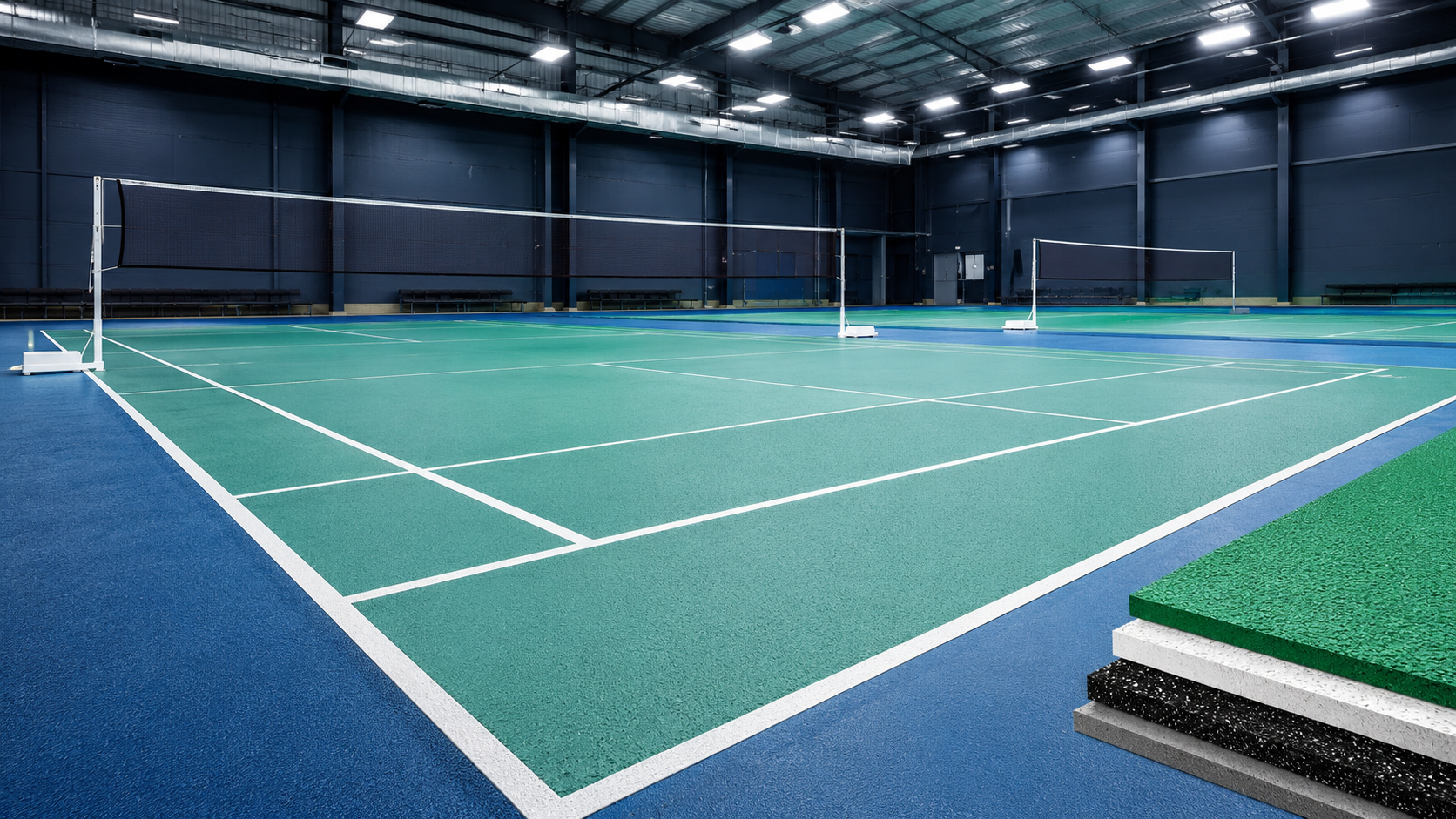
Badminton court synthetic flooring is a specialized sports surface engineered to provide suitable traction, shock absorption, durability, and playing consistency. Depending on the facility and performance requirements, synthetic systems may be made using PVC, polyurethane, rubberized materials, or other multi-layer sports flooring technologies.
The flooring is normally installed over a properly prepared concrete or engineered base. Its construction may include several layers that work together to provide stability and player comfort.
A professional badminton flooring system generally focuses on:
- Surface grip and controlled traction
- Shock absorption
- Player comfort
- Dimensional stability
- Resistance to regular wear
- Easy cleaning and maintenance
- Consistent movement across the court
- Professional court appearance
The right flooring can make a significant difference in how players move, stop, turn, jump, and land during a game.
Why Synthetic Flooring Is Important for Badminton Courts
Badminton involves frequent lateral movements and sudden acceleration. Players may move from one side of the court to another within seconds and repeatedly perform lunges and jumps.
A hard, slippery, uneven, or unsuitable floor can increase discomfort and negatively affect movement. Synthetic sports flooring is designed to create a controlled playing environment where athletes can move confidently.
For facilities with frequent usage, choosing the right badminton court flooring is also an investment in long-term performance. A quality system can withstand repeated training sessions while maintaining its surface characteristics when properly installed and maintained.
Major Benefits of Badminton Court Synthetic Flooring
1. Improved Player Safety
Safety is one of the most important considerations when constructing an indoor badminton court. Synthetic sports flooring can provide controlled traction, helping players maintain their footing during rapid movements.
The surface should offer enough grip to reduce unwanted slipping without being excessively abrasive or restrictive. Properly selected sports flooring helps create a safer environment for beginners, recreational players, coaches, and competitive athletes.
2. Shock Absorption and Player Comfort
Badminton players frequently jump, lunge, and land during play. Repeated impact on an extremely hard surface can make training uncomfortable.
Many synthetic sports flooring systems are designed with cushioning properties that help absorb a portion of impact. Depending on the flooring construction, the underlying layers can contribute to a more comfortable playing experience.
This feature is especially valuable for badminton academies and sports centers where players spend several hours training every day.
3. Consistent Playing Surface
A professional badminton court needs a level and uniform surface. Uneven flooring can affect footwork and create safety concerns.
Synthetic flooring installed over a properly prepared base can provide a smooth, consistent playing surface throughout the court. Consistency is particularly important for training centers and facilities hosting regular competitions.
4. Excellent Traction
Footwork is fundamental to badminton. Players need to accelerate, stop, change direction, and recover quickly.
A quality badminton flooring system provides controlled traction that supports these movements. The objective is not simply to create a highly grippy floor but to achieve an appropriate balance between grip and movement.
5. Durability
Badminton facilities can experience substantial daily foot traffic. Courts may be used by multiple players, coaches, schools, and teams throughout the day.
Commercial-grade synthetic flooring is designed to withstand regular sports activity. With appropriate installation and maintenance, a good flooring system can provide reliable performance for an extended period.
6. Professional Appearance
The appearance of a badminton court can influence the overall impression of a sports facility.
Modern synthetic surfaces are available in a range of colors and finishes, allowing facility owners to create a clean, professional environment. Properly applied court lines further improve visibility and presentation.
7. Easier Maintenance
Compared with many conventional flooring options, specialized synthetic sports surfaces can be relatively straightforward to maintain.
Routine sweeping, dust removal, appropriate damp cleaning, and prompt treatment of spills can help preserve the appearance and performance of the surface.
8. Suitable for High-Usage Facilities
Synthetic badminton flooring can be used in:
- Badminton academies
- Sports clubs
- Schools and colleges
- Universities
- Indoor stadiums
- Fitness centers
- Gyms
- Corporate sports facilities
- Residential communities
- Hotels and resorts
- Community recreation centers
- Professional training facilities
The flooring specification should be selected according to expected usage, budget, indoor environment, and performance requirements.
Types of Synthetic Flooring for Badminton Courts
Different facilities require different flooring systems. There is no single solution that is ideal for every project.
PVC Sports Flooring
PVC sports flooring is widely used for indoor badminton courts because it can provide a practical combination of durability, comfort, appearance, and maintenance convenience.
Depending on the product specification, PVC flooring can include multiple layers designed for wear resistance, cushioning, dimensional stability, and surface performance.
It is often considered for schools, academies, clubs, and commercial indoor sports facilities.
PU Sports Flooring
Polyurethane, or PU, sports flooring is another option for indoor sports facilities. PU systems can be designed with resilient layers and protective top surfaces.
They are commonly considered for premium sports environments where surface performance, durability, and professional finishing are priorities.
Rubberized Sports Flooring
Rubber-based sports flooring can provide cushioning and impact-management characteristics. It may be considered for multipurpose sports areas and training environments.
The exact suitability depends on the intended badminton use, surface texture, court requirements, and manufacturer specifications.
Modular Sports Flooring
Interlocking sports tiles offer another installation approach. These systems can be installed relatively quickly and may be useful for facilities requiring flexible or replaceable flooring solutions.
However, the product should be specifically designed for badminton or indoor sports rather than using general-purpose recreational tiles.
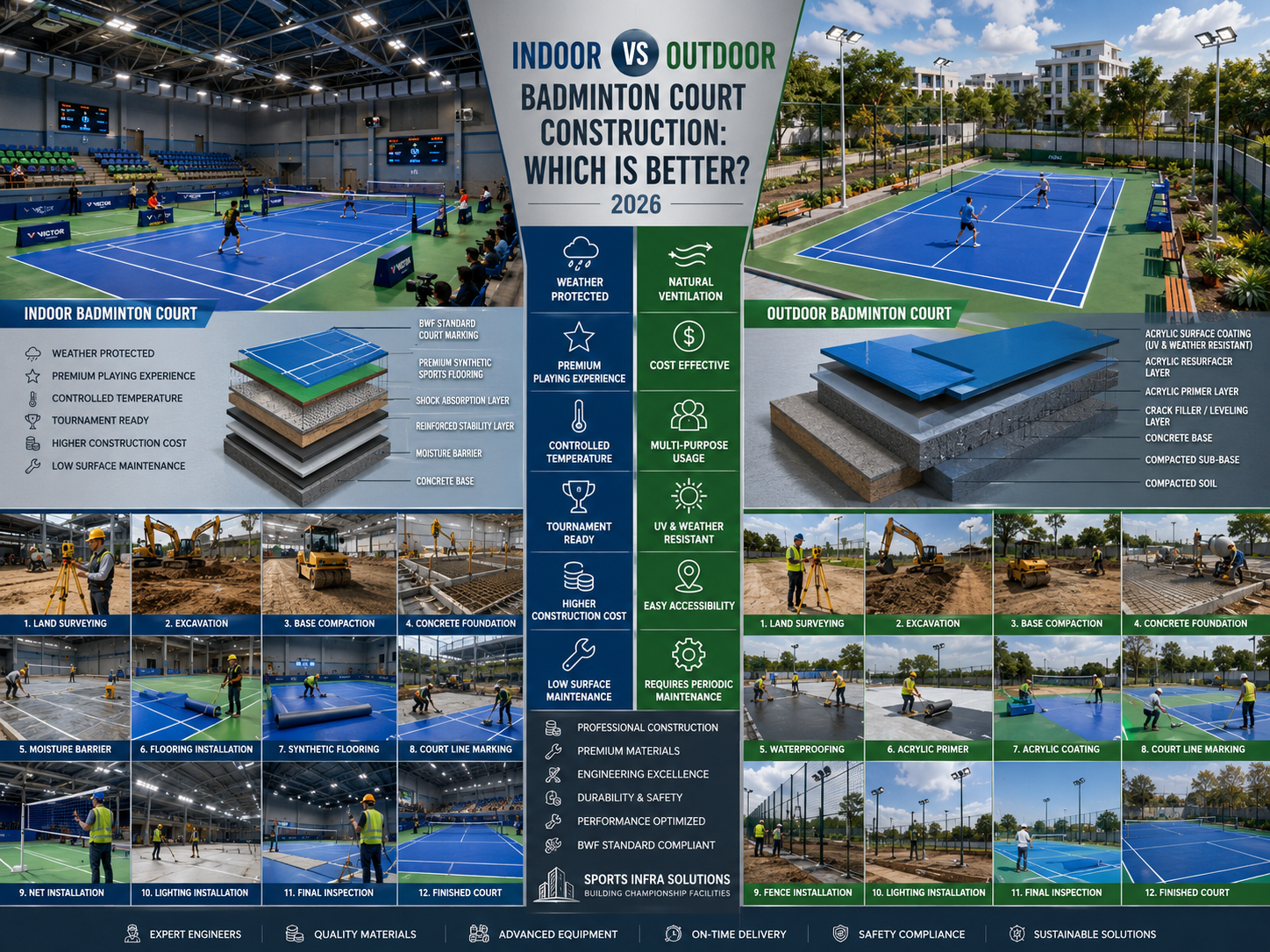
Badminton Court Flooring Installation Process
Professional installation is just as important as selecting a quality flooring product. Even a premium material can perform poorly if the substrate is uneven, damp, contaminated, or incorrectly prepared.
Step 1: Site Inspection
The project begins with an inspection of the proposed court area.
The contractor evaluates:
- Available floor area
- Existing substrate
- Floor level
- Moisture conditions
- Cracks and surface defects
- Drainage or water-related issues
- Access for material movement
- Indoor ventilation and environmental conditions
This assessment helps determine the appropriate preparation and flooring system.
Step 2: Court Layout Planning
The court dimensions, playing area, safety clearance, net position, and surrounding circulation space should be planned before installation begins.
For competitive facilities, the layout should follow the applicable badminton regulations and the requirements of the intended level of play.
Adequate clearance around the court is also important because players should have sufficient space for movement beyond the marked playing area.
Step 3: Subfloor Preparation
Subfloor preparation is one of the most important stages.
The base should be:
- Clean
- Dry
- Stable
- Properly levelled
- Free from loose material
- Free from excessive cracks
- Suitable for the selected flooring system
Existing defects should be repaired before the synthetic surface is installed.
Step 4: Moisture and Surface Checks
Indoor flooring can be affected by excessive moisture beneath the surface. Therefore, appropriate moisture assessment should be carried out according to the flooring manufacturer’s installation requirements.
Ignoring moisture-related problems can lead to adhesion failure, bubbling, discoloration, or premature deterioration.
Step 5: Primer or Base Treatment
Depending on the selected flooring system, a suitable primer, adhesive, underlayment, or base treatment may be applied.
The materials and application method should follow the manufacturer’s technical specifications.
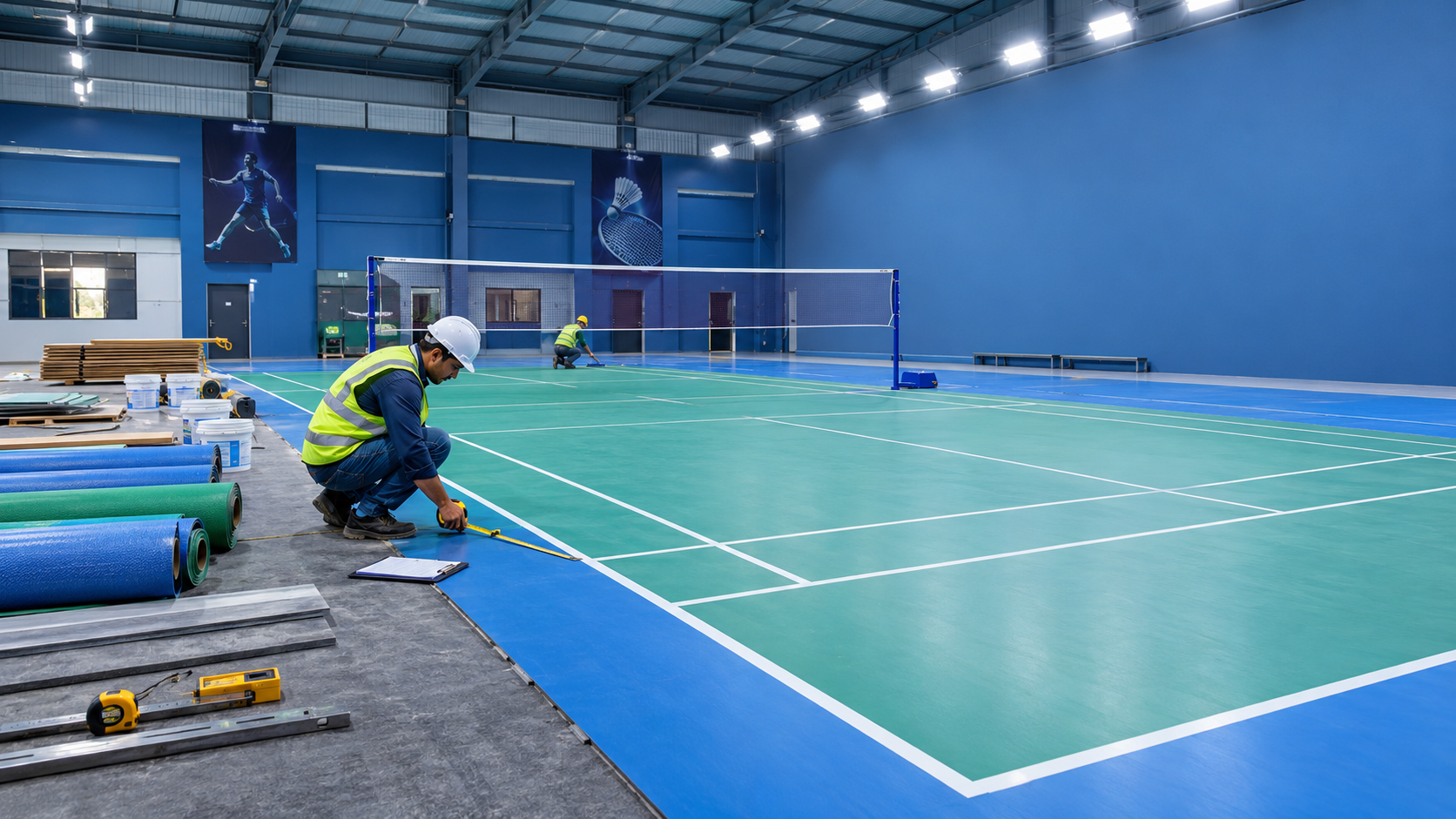
Step 6: Synthetic Flooring Installation
The selected synthetic flooring is then installed across the prepared surface.
For sheet-based systems, careful alignment and seam treatment are essential. For PU systems, multiple layers may be installed sequentially with appropriate curing time between stages.
The installation team should maintain consistent workmanship throughout the court.
Step 7: Court Line Marking
After the flooring has been installed and sufficiently cured, badminton court markings are applied.
The lines should be accurately positioned and clearly visible. Professional line marking improves both usability and visual quality.
Step 8: Final Inspection
The completed surface should be checked for:
- Surface uniformity
- Flooring adhesion
- Visible defects
- Seam quality
- Court dimensions
- Line accuracy
- Surface cleanliness
- Overall finishing
Only after the flooring has reached the required curing condition should the court be opened for regular play.
Important Factors When Choosing Badminton Court Flooring
Selecting flooring based only on price can create problems later. Several factors should be evaluated before making a decision.
Usage Level
A private recreational court may have very different requirements from a commercial badminton academy operating throughout the day.
Estimate the expected number of players, operating hours, and frequency of use.
Indoor Environment
Humidity, ventilation, temperature, and moisture conditions can influence flooring performance. The selected product should be appropriate for the actual indoor environment.
Shock Absorption
Consider the cushioning requirements of the players and the intended use of the facility. A sports floor should provide an appropriate balance between comfort and stability.
Slip Resistance
The surface should provide controlled traction suitable for badminton movements. Excessively slippery or unsuitable surfaces should be avoided.
Durability
For commercial facilities, choose a system designed for frequent sports use rather than a general residential floor.
Maintenance Requirements
Ask about recommended cleaning products, periodic maintenance, repair procedures, and expected service requirements before selecting the flooring.
Installation Quality
The contractor’s experience matters. Proper substrate preparation, adhesive application, seam treatment, curing, and line marking can have a major effect on the final result.
Badminton Court Flooring Maintenance
Regular maintenance protects the flooring investment and helps preserve playing performance.
Daily Cleaning
Remove dust, dirt, hair, and loose debris regularly. Fine particles can accumulate on the surface and affect traction.
A soft microfiber mop or cleaning equipment recommended by the flooring manufacturer can be used for routine cleaning.
Avoid Excess Water
Synthetic indoor flooring should not normally be flooded or exposed to unnecessary standing water.
Use controlled damp cleaning according to the flooring manufacturer’s recommendations.
Clean Spills Quickly
Food, beverages, and other liquids should be cleaned promptly. Delayed cleaning can leave stains or create slippery areas.
Use Appropriate Cleaning Products
Do not automatically use household chemicals, abrasive cleaners, strong solvents, or aggressive scrubbing equipment.
Always select cleaning products compatible with the specific flooring system.
Protect the Surface
Outdoor footwear, metal furniture, sharp objects, and unsuitable equipment can damage indoor sports flooring.
Players should ideally use clean, non-marking indoor badminton shoes.
Inspect the Court Regularly
Facility managers should periodically inspect the surface for:
- Loose sections
- Surface damage
- Seam problems
- Bubbles
- Stains
- Wear patterns
- Damaged court markings
Early detection can prevent minor problems from becoming expensive repairs.
Common Mistakes to Avoid
Installing Flooring Over an Unprepared Base
A synthetic surface cannot compensate for a badly prepared substrate. Cracks, unevenness, moisture, and contamination should be addressed before installation.
Choosing Based Only on Low Cost
The cheapest flooring may not be the most economical solution over its complete service life. Consider durability, maintenance, installation quality, and performance.
Using General Flooring Instead of Sports Flooring
Ordinary vinyl, tiles, or concrete may not provide the characteristics required for badminton.
Ignoring Court Clearance
Building only the marked court without considering surrounding movement space can create an uncomfortable and potentially unsafe playing environment.
Poor Line Marking
Incorrect or poorly finished court lines can affect usability and make the facility appear unprofessional.
Inadequate Maintenance
Even a high-quality flooring system requires regular cleaning and care. Neglect can shorten its useful life and affect playing conditions.
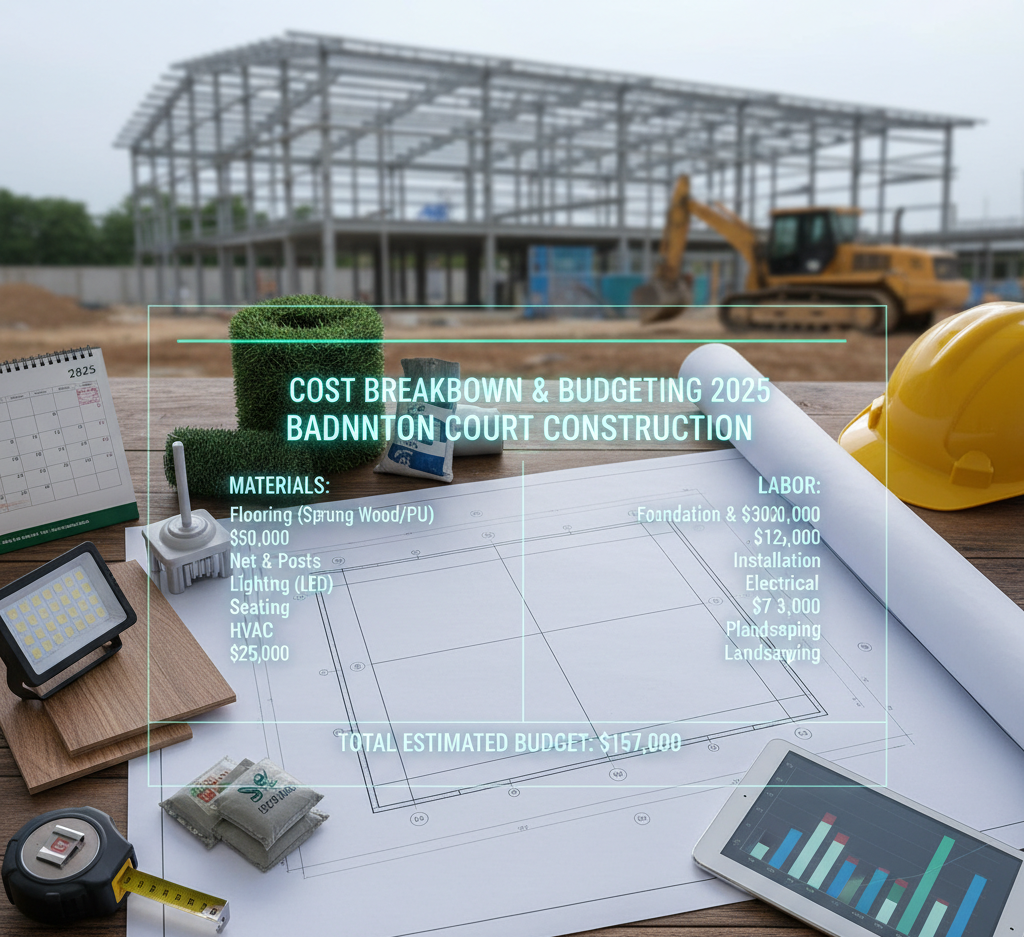
Cost of Badminton Court Synthetic Flooring
The cost of synthetic badminton court flooring depends on several project-specific factors.
Important cost components may include:
- Flooring material
- Court size
- Number of courts
- Subfloor condition
- Surface preparation
- Cushioning system
- Installation labor
- Court line marking
- Transportation
- Site accessibility
- Additional sports infrastructure
- Maintenance requirements
A project requiring major base repairs will generally have different costs from a new facility with a ready-to-use concrete substrate.
For an accurate estimate, a professional contractor should inspect the site and understand the required flooring specification before preparing a quotation.
How Long Does Badminton Court Flooring Last?
The service life of synthetic sports flooring depends on product quality, installation standards, usage intensity, environmental conditions, and maintenance.
A court used occasionally by a small group will naturally experience less wear than a commercial academy operating from morning until night.
Regular cleaning, appropriate footwear, controlled indoor conditions, and timely repairs can help maximize flooring performance.
Why Professional Installation Matters
Badminton court flooring should not be treated as a simple floor-covering project. It is a sports infrastructure system where the quality of the substrate, material selection, installation technique, and finishing all influence the final playing environment.
Professional installation can help ensure:
- Correct substrate preparation
- Accurate flooring installation
- Proper material handling
- Reliable adhesion
- Consistent surface finishing
- Accurate court marking
- Better long-term performance
An experienced sports flooring contractor can also recommend an appropriate system based on the facility’s usage and budget.
Applications of Synthetic Badminton Flooring
Synthetic badminton flooring can be used in a wide variety of facilities.
Badminton Academies
Training centers require durable surfaces that can handle continuous foot traffic and intensive player movement.
Schools and Colleges
Educational institutions can use synthetic sports flooring to create safer indoor recreation and physical education spaces.
Sports Clubs
Clubs often need premium-looking courts that remain attractive while handling regular member usage.
Gyms and Fitness Centers
Badminton courts can complement fitness facilities and provide additional recreational opportunities for members.
Residential Communities
Apartment complexes and gated communities can install indoor badminton courts as part of their recreational infrastructure.
Corporate Facilities
Companies increasingly provide sports and wellness amenities for employees. Professionally finished badminton courts can become part of corporate recreation spaces.
Frequently Asked Questions
What is the best flooring for a badminton court?
The ideal flooring depends on the facility, usage, budget, and performance requirements. PVC, PU, and other specialized sports flooring systems can be considered for indoor badminton courts.
Is synthetic flooring suitable for professional badminton?
Yes. Specialized synthetic sports flooring can be designed for high-performance indoor badminton facilities, provided the selected system and installation meet the appropriate performance requirements.
Can synthetic badminton flooring be installed over concrete?
Yes, provided the concrete substrate meets the flooring manufacturer’s requirements for levelness, strength, cleanliness, dryness, and surface condition.
How should badminton court flooring be cleaned?
Routine dust removal and manufacturer-approved damp cleaning are generally suitable. The exact cleaning method should always follow the flooring manufacturer’s maintenance instructions.
Can damaged synthetic flooring be repaired?
Depending on the flooring type and extent of damage, localized repairs or replacement may be possible. Early repair is usually preferable to allowing damage to spread.
How much space is required for a badminton court?
The marked playing area is only part of the planning requirement. Additional clearance around the court is necessary for player movement, safety, lighting, access, and facility design.
Is professional installation necessary?
Professional installation is strongly recommended because substrate preparation, flooring installation, curing, and line marking directly affect court performance and durability.
Final Thoughts
A well-designed badminton court requires more than accurate court dimensions and attractive markings. The flooring is one of the most important components because it directly influences player movement, comfort, safety, and the overall quality of the sports facility.
Badminton court synthetic flooring provides a practical solution for academies, schools, clubs, gyms, commercial sports centers, residential communities, and professional training facilities. With the right material, properly prepared substrate, skilled installation, and consistent maintenance, a synthetic sports floor can provide a reliable playing environment for years.
Before starting a badminton court project, evaluate the expected usage, available space, base condition, indoor environment, flooring technology, maintenance requirements, and overall budget. Working with an experienced sports flooring contractor can help ensure that the finished court delivers the performance, appearance, and durability expected from a modern badminton facility.
If you are planning a new badminton court or upgrading an existing sports facility, a professional site assessment is the best starting point for selecting the right badminton court flooring system, installation method, and long-term maintenance approach.