Introduction
Box cricket has become a popular format for players who want a fast, exciting, and convenient cricket experience in an urban environment. Unlike a traditional cricket ground, a box cricket facility can be developed on a comparatively smaller plot and can operate with controlled boundaries, artificial turf, safety netting, floodlights, and purpose-built playing infrastructure.
But building a successful box cricket turf involves much more than installing artificial grass and putting up nets. The quality of the ground preparation, drainage, turf system, fencing, lighting, safety arrangements, and overall layout directly affects playing performance, durability, and maintenance requirements.
If you are planning to develop a box cricket facility for a sports academy, commercial turf, school, residential community, club, or private property, understanding the construction process can help you plan the project more effectively.
This guide explains how to build a box cricket turf step by step, from site selection and ground preparation to artificial turf installation, netting, lighting, testing, and final handover.
What Is a Box Cricket Turf?
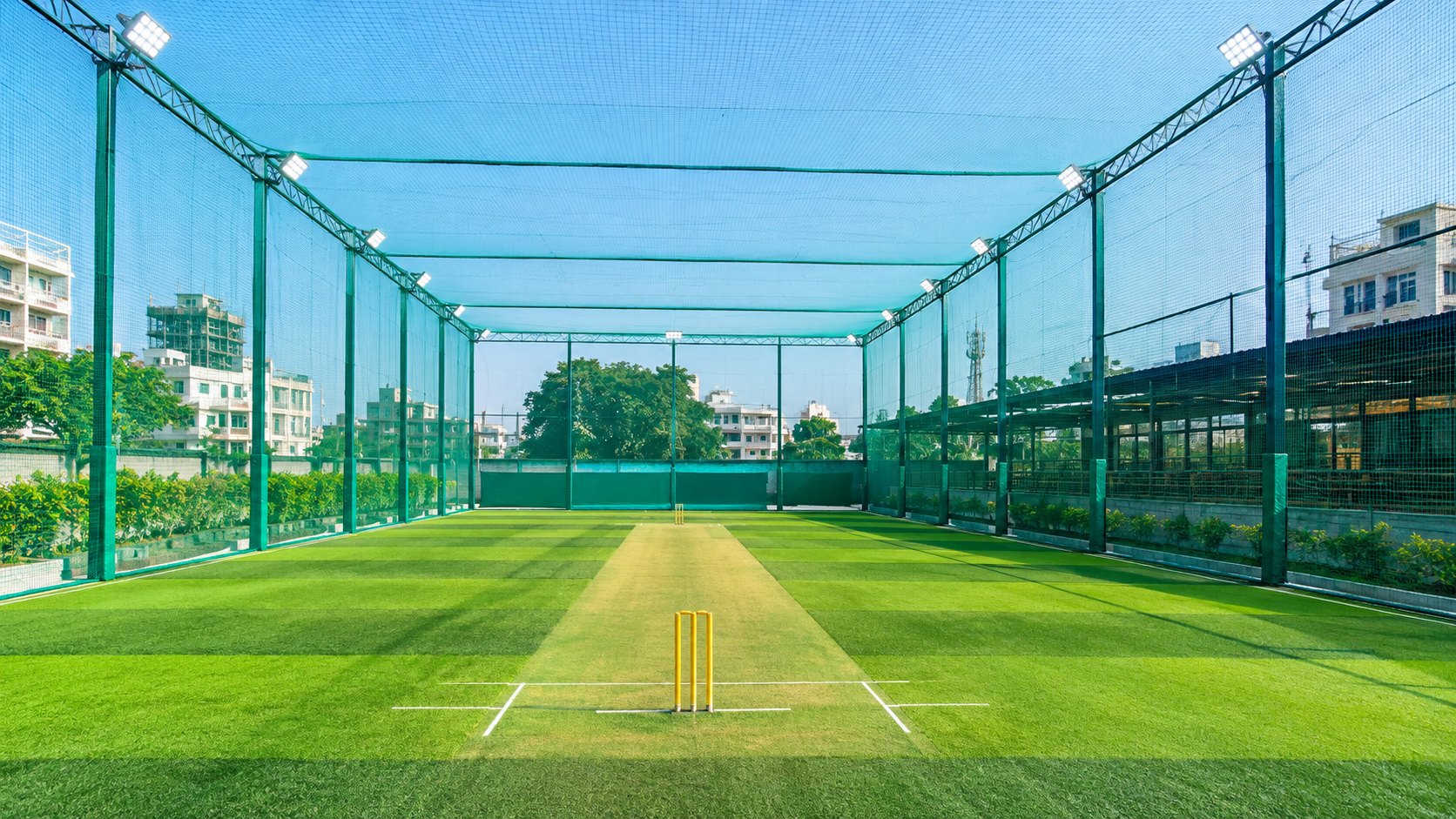
A box cricket turf is an enclosed cricket playing area designed for short-format games. The facility normally consists of an artificial cricket surface surrounded by protective nets or fencing.
The enclosed design keeps the ball inside the playing area, allowing several players to enjoy a match without requiring the large space associated with conventional cricket grounds.
A typical box cricket facility may include:
- Artificial cricket turf
- Concrete or asphalt base
- Shock-absorbing underlay, where required
- Cricket pitch area
- Side and roof safety nets
- Structural steel framework
- LED floodlights
- Cricket wickets and stumps
- Boundary markings
- Player entry and exit gate
- Seating or spectator area
- Reception or booking area
- Drainage system
- Optional changing rooms and washrooms
The exact design depends on the available land, expected usage, budget, and whether the facility is intended for recreational or commercial operation.
Select the Right Location
The first stage of box cricket turf construction is selecting a suitable site.
A good location should have sufficient space for the playing area as well as circulation, entry, equipment storage, and other facilities. For a commercial turf, accessibility is particularly important because customers generally prefer locations that are easy to reach.
Before finalizing the property, consider:
- Available land dimensions
- Road accessibility
- Vehicle parking
- Electricity availability
- Water drainage
- Soil condition
- Surrounding buildings
- Noise considerations
- Local permissions and regulations
- Future expansion possibilities
Do not evaluate the site only by its total square footage. The usable playing area can be affected by setbacks, columns, drainage channels, entrances, parking, and other site requirements.
A professional site survey should therefore be completed before construction begins.
Decide the Box Cricket Turf Size and Layout
Once the site has been selected, prepare a detailed layout.
There is no single universal size for every box cricket facility. The dimensions can vary according to land availability and the intended playing format.
A commercial facility may include space for:
- Main cricket playing area
- Pitch
- Boundary zone
- Netting
- Entry gate
- Player waiting area
- Spectator seating
- Equipment storage
- Lighting structures
- Reception
- Washrooms
- Parking
The layout should also provide enough clearance around structural elements so that players are not exposed to unnecessary collision risks.
At this stage, decide where the steel framework, floodlights, nets, electrical cables, drainage points, and access gates will be positioned.
Good planning at the beginning can prevent expensive modifications later.
Conduct a Site and Soil Inspection
Before preparing the ground, inspect the existing site condition.
The contractor should check whether the area contains:
- Loose soil
- Construction debris
- Existing concrete
- Uneven surfaces
- Standing water
- Poor drainage
- Underground utilities
- Vegetation or roots
- Cracks or damaged pavement
Soil condition is particularly important when the project requires excavation and a new base.
If the ground is weak or unstable, simply laying turf over it can result in settlement, unevenness, water accumulation, and premature surface damage.
The construction method should therefore be selected according to actual site conditions rather than following the same specification for every project.
Clear and Level the Site
After the site inspection, the construction area is cleared.
Existing vegetation, debris, loose material, unwanted structures, and unsuitable soil are removed as required.
The ground is then graded to achieve the required levels.
Proper leveling is essential because artificial turf follows the shape of the surface beneath it. Small irregularities in the base can eventually become noticeable on the playing surface.
Heavy equipment such as rollers, compactors, and leveling machinery may be used depending on the project.
The objective is to create a stable and properly compacted foundation before installing the sports surface.
Build the Base Foundation
The base is one of the most important parts of box cricket turf construction.
A common construction approach involves preparing a compacted sub-base followed by a suitable hard surface such as concrete or asphalt, depending on the design.
The foundation may include multiple layers, such as:
- Prepared soil
- Compacted granular sub-base
- Aggregate layer
- Base surface
- Leveling or finishing layer
- Artificial turf system
The exact thickness and materials should be selected according to soil conditions, expected traffic, drainage requirements, and engineering specifications.
A properly constructed base provides stability and helps maintain a consistent playing surface.
Install a Proper Drainage System
Drainage should never be treated as an afterthought.
Water can affect the foundation, artificial turf, adhesives, and surrounding areas if it cannot leave the playing surface efficiently.
For outdoor box cricket facilities, the drainage design may include:
- Surface slope
- Perimeter drains
- Drainage channels
- Collection points
- Perforated drainage pipes
- Stormwater connections
The playing area should be designed so that rainwater moves toward the appropriate drainage points instead of remaining trapped beneath the turf.
For indoor or covered facilities, drainage requirements may be different, but moisture management is still important during construction and cleaning.
Install the Artificial Cricket Turf
After the base has been completed, inspected, and cleaned, artificial cricket turf can be installed.
Artificial cricket turf is available in different constructions, pile heights, densities, backing systems, and performance characteristics.
The right surface should be selected according to the type of cricket being played and the expected frequency of use.
The installation generally involves:
- Measuring the playing area
- Planning turf rolls
- Cutting the material
- Positioning the turf
- Joining individual sections
- Securing seams
- Applying adhesive where required
- Installing infill if specified
- Brushing and leveling the surface
The turf should be installed carefully to avoid wrinkles, loose edges, visible seams, or uneven sections.
For a commercial cricket facility that receives heavy daily usage, choosing an appropriate sports-grade artificial turf system is particularly important.
Construct the Cricket Pitch
The cricket pitch is the central playing zone and requires careful preparation.
Depending on the facility design, the pitch may use a dedicated cricket turf system while the surrounding area uses another type of artificial sports surface.
The pitch should provide:
- Consistent ball response
- Suitable traction
- Player stability
- Adequate durability
- Easy maintenance
The wicket position and pitch markings should be accurately measured.
If the facility is intended for regular training, academy use, or organized competitions, the pitch specification should be selected according to the expected style of play.
Build the Steel Framework
The next major stage is constructing the enclosure framework.
A box cricket facility typically uses a structural steel framework around the playing area. The framework supports the side nets, roof netting, lighting fixtures, and other equipment.
Important considerations include:
- Steel section selection
- Column positioning
- Structural stability
- Foundation depth
- Welding and connection quality
- Corrosion protection
- Net attachment points
- Lighting support
- Wind loads for outdoor installations
The steel structure should be designed and installed by qualified professionals. It must be capable of supporting the intended loads and environmental conditions.
Install Side and Roof Safety Nets
The enclosure is what distinguishes box cricket from an open cricket ground.
High-quality sports safety nets are installed around the playing area to keep cricket balls within the facility.
The netting system can include:
- Side nets
- Back nets
- Roof nets
- Ball-stop nets
- Protective netting around selected structural areas
The mesh specification should be selected according to expected ball speed, usage intensity, and facility design.
The nets should be securely attached to the structural framework and regularly inspected for cuts, loose sections, or damaged connections.
Install LED Floodlights
Good lighting is essential if the facility will operate during evenings or at night.
LED sports floodlights are commonly used because they can provide strong illumination with comparatively efficient energy consumption.
Lighting design should focus on:
- Playing surface visibility
- Uniform illumination
- Reduced glare
- Appropriate mounting height
- Safe electrical installation
- Easy maintenance
Simply installing powerful lights does not guarantee good playing conditions. Their position, beam angle, mounting height, and distribution should be planned so that players can track the ball comfortably.
Electrical cables should also be protected and routed safely away from player movement.
Install Wickets and Cricket Accessories
Once the main surface and enclosure are complete, install the playing equipment.
Common box cricket accessories include:
- Cricket stumps
- Wickets
- Batting crease markings
- Bowling crease markings
- Boundary markings
- Protective padding
- Benches
- Scoreboards
- Ball storage
- Bats and balls
Commercial facilities may also provide additional player amenities depending on their business model.
Equipment should be positioned securely without creating unnecessary hazards inside the playing area.
Complete Court Marking
Clear markings help players understand the playing area and maintain consistent gameplay.
The markings should be measured accurately before being applied.
Depending on the facility, markings can identify:
- Pitch area
- Batting crease
- Bowling crease
- Boundary
- Entry area
- Other game-specific zones
Use suitable marking materials compatible with the installed artificial turf.
Poor-quality paint or incorrect measurements can make the facility look unfinished and may require frequent maintenance.
Carry Out Quality Inspection
Before opening the turf, conduct a complete inspection.
Check the:
- Artificial turf
- Seams
- Base level
- Drainage
- Steel framework
- Safety nets
- Lighting
- Electrical connections
- Wickets
- Markings
- Gates
- Access areas
Walk across the complete playing surface and look for uneven areas, loose edges, wrinkles, damaged turf, or visible installation defects.
Test the lights during actual operating conditions and inspect the netting from different areas of the court.
A final quality-control inspection can identify small problems before customers start using the facility.
Test the Playing Surface
The final step is practical testing.
Players or technicians can inspect the surface for:
- Footing
- Ball bounce
- Surface consistency
- Grip
- Movement
- Drainage performance
- General playing comfort
For a commercial facility, testing the turf before opening also provides an opportunity to identify areas requiring adjustment.
Once the construction team completes the final corrections, the box cricket facility can be prepared for regular operation.
How Much Does It Cost to Build a Box Cricket Turf?
The cost of constructing a box cricket turf varies significantly from one project to another.
There is no single fixed price because several factors influence the overall investment.
Major cost factors include:
- Land size
- Site condition
- Civil foundation work
- Drainage
- Artificial turf quality
- Pitch construction
- Steel structure
- Safety netting
- Lighting system
- Electrical work
- Gates and accessories
- Seating and amenities
- Transportation
- Installation location
- Number of playing areas
A simple recreational facility will have different requirements from a premium commercial box cricket centre with multiple courts, reception facilities, washrooms, parking, professional lighting, and additional sports amenities.
For this reason, obtaining a site-specific quotation after inspection is generally more useful than relying on a generic per-square-foot estimate.
How Long Does Box Cricket Turf Construction Take?
The construction timeline depends on the size and complexity of the project.
A smaller facility with a prepared site may be completed faster, while a project requiring extensive civil work, drainage, steel fabrication, electrical installation, and additional amenities will require more time.
Typical stages include:
Planning → Site preparation → Base construction → Drainage → Turf installation → Steel structure → Netting → Lighting → Accessories → Testing
Weather conditions, material availability, site accessibility, and approval requirements can also affect the schedule.
A professional contractor should provide a project-specific timeline after assessing the site.
Maintenance of a Box Cricket Turf
Regular maintenance can significantly improve the usable life and appearance of an artificial cricket turf.
Recommended maintenance practices include:
- Remove leaves and debris regularly.
- Brush the artificial turf as recommended by the manufacturer.
- Inspect seams and edges periodically.
- Check safety nets for damage.
- Keep drainage channels clear.
- Inspect the steel structure for corrosion.
- Clean the playing surface appropriately.
- Check LED lights and electrical connections.
- Repair damaged areas promptly.
- Avoid unauthorized heavy equipment on the turf.
Commercial facilities should maintain a documented inspection and maintenance schedule because frequent usage can accelerate surface wear.
Common Mistakes to Avoid When Building a Box Cricket Turf
Several construction mistakes can increase maintenance costs and reduce playing quality.
1. Ignoring the Base
Artificial turf cannot compensate for an unstable or uneven foundation.
2. Poor Drainage Planning
Water accumulation can damage the base and affect the turf system.
3. Choosing Turf Only by Price
The cheapest turf may not provide the durability or playing characteristics required for frequent commercial use.
4. Weak Netting Structure
Safety nets and their supporting framework need to withstand repeated ball impact and environmental conditions.
5. Poor Lighting Design
Uneven lighting or excessive glare can make evening games uncomfortable.
6. Skipping Final Testing
A facility should be inspected and tested before opening to customers.
Why Professional Box Cricket Turf Construction Matters
A box cricket facility combines civil construction, sports flooring, structural fabrication, netting, electrical systems, drainage, and sports equipment.
Each component affects the performance of the others.
For example, premium artificial turf installed over a poorly prepared base may still develop problems. Similarly, a strong structure with incorrectly installed netting may create safety and maintenance issues.
Working with an experienced sports facility contractor can help coordinate these components under one project plan.
A professional construction team can assist with:
- Site inspection
- Layout planning
- Civil work
- Drainage
- Artificial turf installation
- Steel structure
- Safety netting
- Lighting
- Sports accessories
- Testing
- Maintenance guidance
Final Thoughts
Building a box cricket turf requires careful planning, quality materials, accurate installation, and proper testing. The process starts with selecting the right site and designing an efficient layout, followed by ground preparation, foundation work, drainage, artificial turf installation, structural fabrication, netting, lighting, and final quality inspection.
For anyone planning a commercial box cricket facility, the focus should not be limited to construction cost alone. Surface quality, player safety, durability, drainage, lighting, and long-term maintenance can all influence the facility’s performance and operating costs.
A well-planned box cricket turf can provide an attractive and functional sports environment for schools, academies, clubs, communities, businesses, and commercial sports operators.
If you are planning a new box cricket project, begin with a detailed site assessment and layout rather than purchasing materials immediately. Understanding the land, playing requirements, construction method, and expected usage will help create a facility that is practical, durable, and suitable for regular cricket activities.