Introduction
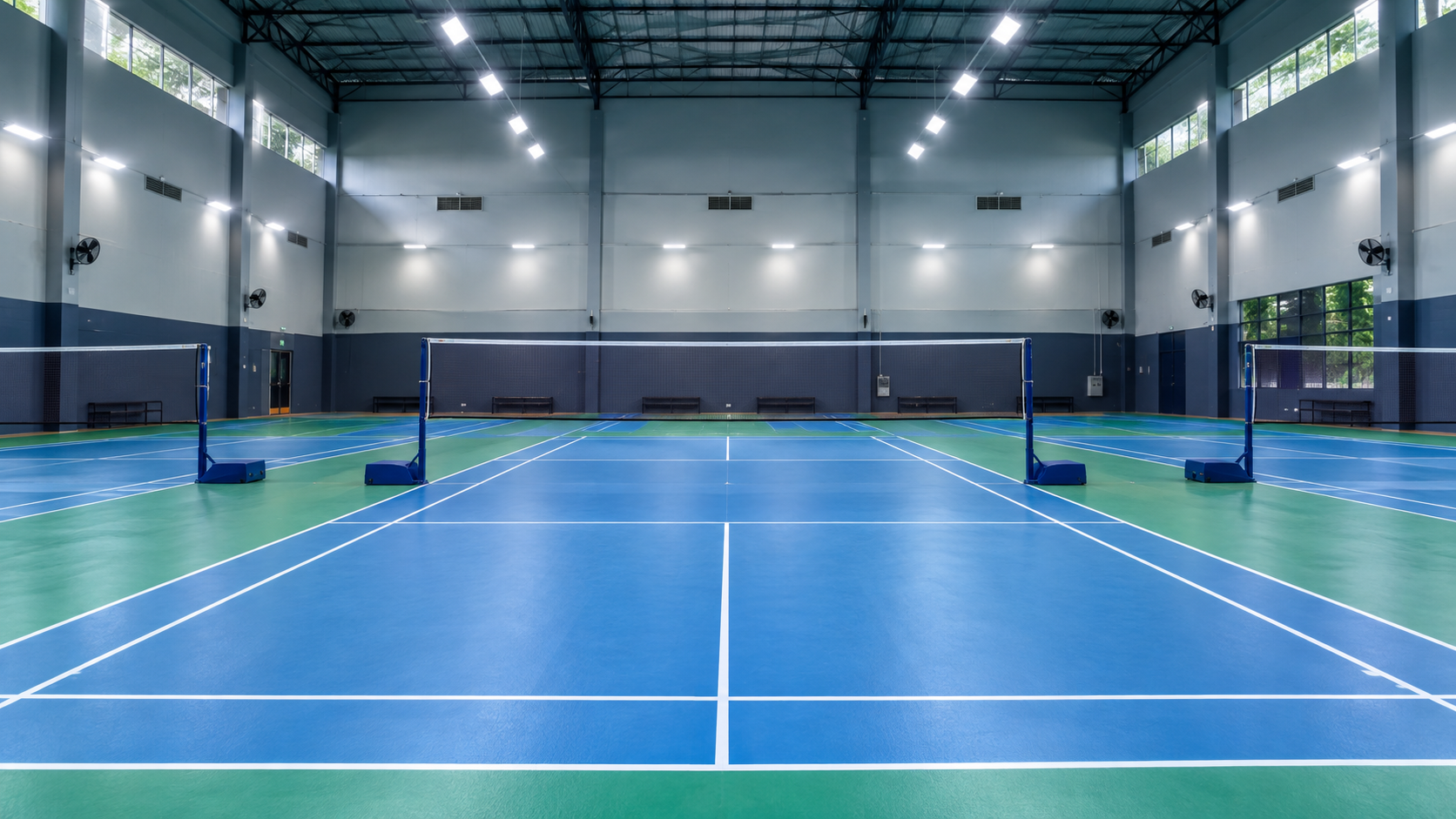
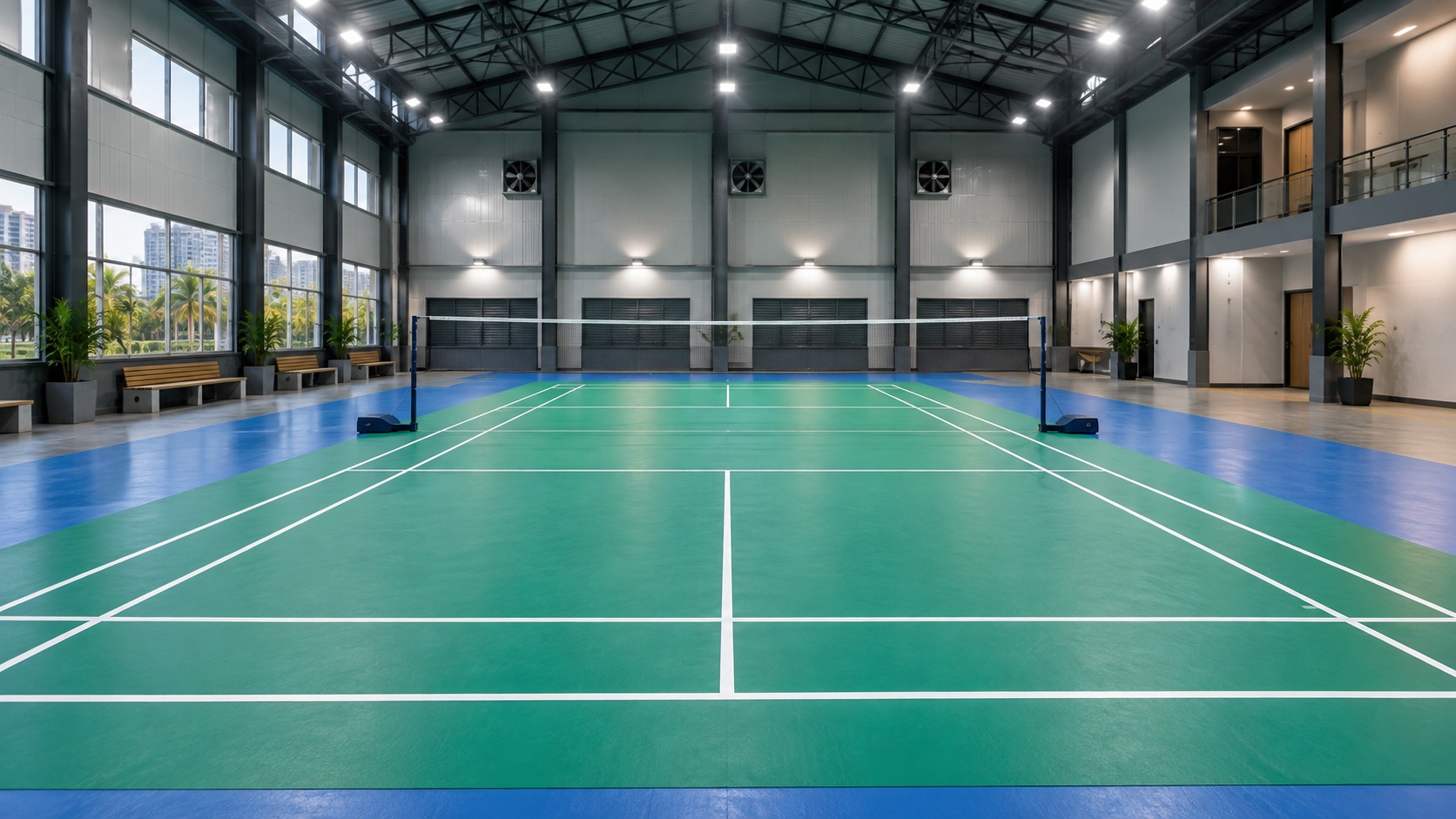
Indoor badminton has evolved from a recreational pastime into one of the world’s fastest-growing competitive sports. From schools and colleges to professional sports academies, fitness clubs, stadiums, and commercial sports facilities, the demand for high-quality indoor badminton courts has increased significantly. At the heart of every successful badminton facility lies one critical element—the flooring system.
Indoor badminton court flooring directly impacts player performance, safety, comfort, durability, and maintenance costs. A poorly designed floor can increase injury risks, reduce playing quality, and require frequent repairs. On the other hand, a professionally installed sports flooring system enhances grip, shock absorption, footwork, and long-term reliability.
Whether you’re planning to build a new court or upgrade an existing facility, this comprehensive guide explains everything you need to know about badminton court flooring, including flooring types, construction process, dimensions, installation, costs, maintenance, and expert recommendations.
Why Badminton Court Matters
Unlike ordinary flooring, badminton flooring is specifically engineered to withstand rapid player movement, repeated impact, sudden directional changes, and continuous gameplay.
A professional badminton flooring system offers:
- Excellent shock absorption
- Superior grip without excessive friction
- Consistent ball and shuttle performance
- Reduced stress on knees and ankles
- Long service life
- Easy maintenance
- Professional playing experience
The right flooring helps athletes perform better while significantly reducing the risk of sports-related injuries.
Characteristics of an Ideal Badminton Court Floor
An international-standard badminton floor should provide:
1. Shock Absorption
Players constantly jump, lunge, and change direction. Proper cushioning reduces impact forces on joints.
2. Slip Resistance
The surface should offer controlled grip, allowing quick movement without slipping.
3. Uniform Bounce
Although badminton primarily involves the shuttlecock, uniform flooring ensures predictable player movement and equipment stability.
4. Comfort
Extended training sessions demand flooring that minimizes fatigue.
5. Durability
Professional courts are designed for years of intensive daily use.
6. Moisture Resistance
Indoor courts experience varying humidity levels. Moisture-resistant flooring helps prevent warping and deterioration.
7. Easy Maintenance
Routine cleaning should be simple without compromising playing performance.
Types of Badminton Court
Selecting the right flooring depends on your budget, level of competition, expected usage, and maintenance capabilities.
1. Wooden Badminton Court
Wooden flooring has long been considered the benchmark for professional badminton courts.
Advantages
- Outstanding shock absorption
- Premium appearance
- Excellent player comfort
- International tournament standards
- Long lifespan with proper care
Best For
- International stadiums
- Sports academies
- Professional tournaments
- Indoor sports complexes
Limitations
- Higher installation cost
- Requires periodic polishing
- Sensitive to moisture
2. PVC Vinyl Sports Flooring
PVC sports flooring has become one of the most popular choices for indoor badminton facilities.
Features
- Multi-layer construction
- Cushioned backing
- Slip-resistant surface
- Easy installation
- Low maintenance
Benefits
- Affordable
- Comfortable
- Excellent traction
- Wide color selection
- Quick installation
Best For
- Schools
- Colleges
- Community centers
- Indoor sports clubs
3. Synthetic Sports Flooring
Synthetic flooring systems are engineered for intensive sports applications.
Benefits include:
- High durability
- Anti-slip texture
- Impact resistance
- Consistent performance
- Minimal maintenance
Ideal for:
- Commercial sports centers
- Indoor stadiums
- Multipurpose sports halls
4. Polyurethane (PU) Sports Flooring
PU flooring combines flexibility with durability.
Advantages include:
- Smooth seamless finish
- Excellent cushioning
- Chemical resistance
- Comfortable playing experience
- Long lifespan
Best suited for:
- Premium sports complexes
- High-performance training centers
5. Modular Sports Tiles
Interlocking modular flooring provides flexibility and easy installation.
Advantages:
- Portable
- Replaceable sections
- Fast installation
- Minimal downtime
However, these systems are generally preferred for recreational facilities rather than professional badminton tournaments.
Comparison of Indoor Badminton Types
| Flooring Type | Comfort | Durability | Maintenance | Cost | Professional Use |
|---|---|---|---|---|---|
| Wooden Flooring | Excellent | Excellent | Medium | High | Yes |
| PVC Vinyl | Excellent | Very Good | Easy | Medium | Yes |
| Synthetic Flooring | Very Good | Excellent | Easy | Medium | Yes |
| Polyurethane | Excellent | Excellent | Easy | High | Yes |
| Modular Tiles | Good | Good | Easy | Low | Limited |
Standard Badminton Court Dimensions
Following international dimensions ensures a professional playing experience.
Court Length
13.40 meters
Court Width (Doubles)
6.10 meters
Court Width (Singles)
5.18 meters
Net Height at Center
1.524 meters
Net Height at Posts
1.55 meters
Recommended Ceiling Height
Minimum 9 meters
Lighting Level
Professional facilities generally require uniform lighting with minimal glare.
Components of Badminton Court
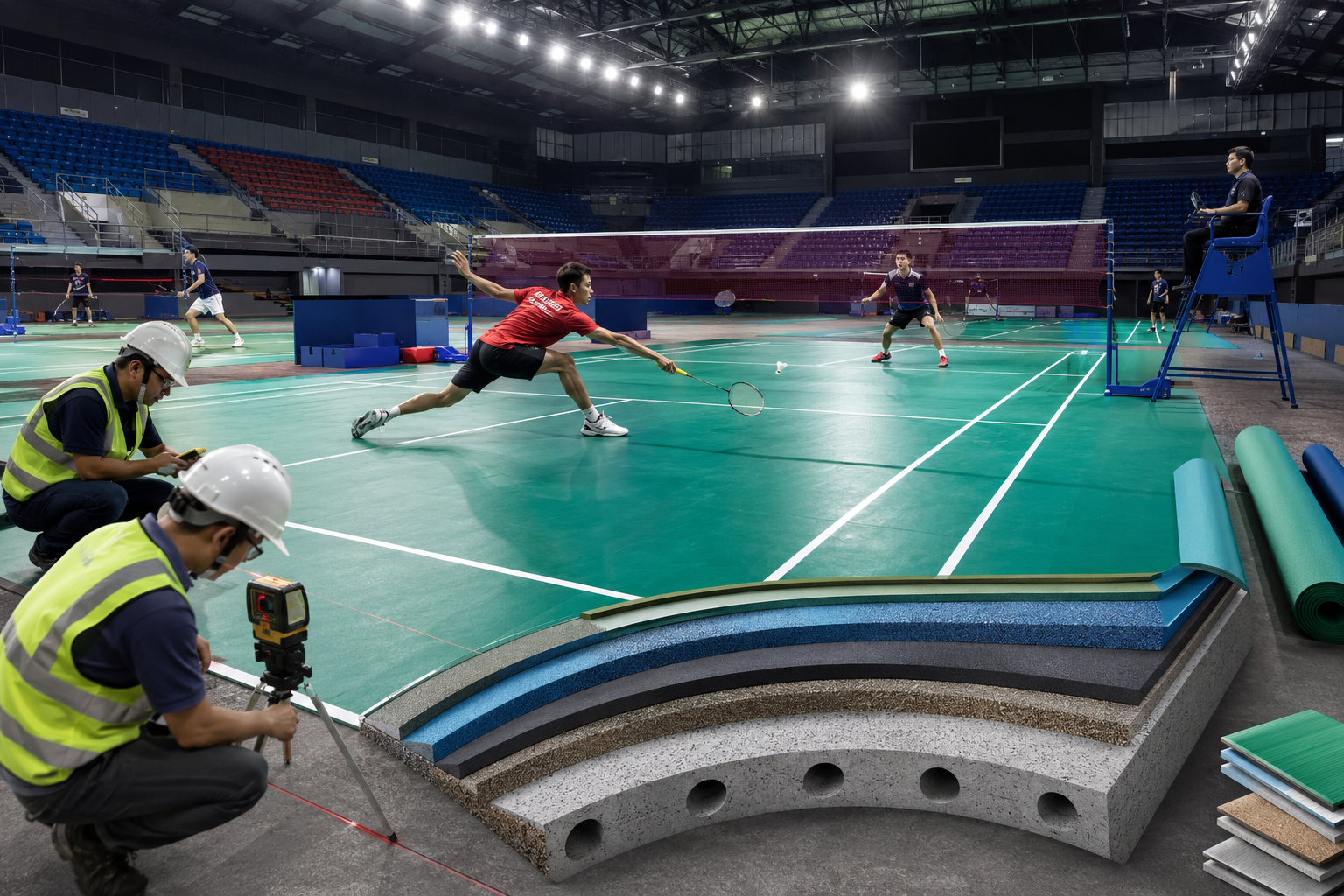
Professional badminton flooring consists of multiple layers.
Concrete Base
Provides structural stability.
Moisture Barrier
Prevents moisture damage.
Shock Absorption Layer
Reduces impact during movement.
Sports Flooring Layer
The primary playing surface.
Surface Finish
Provides grip and protects the flooring.
Step-by-Step Badminton Court Installation Process
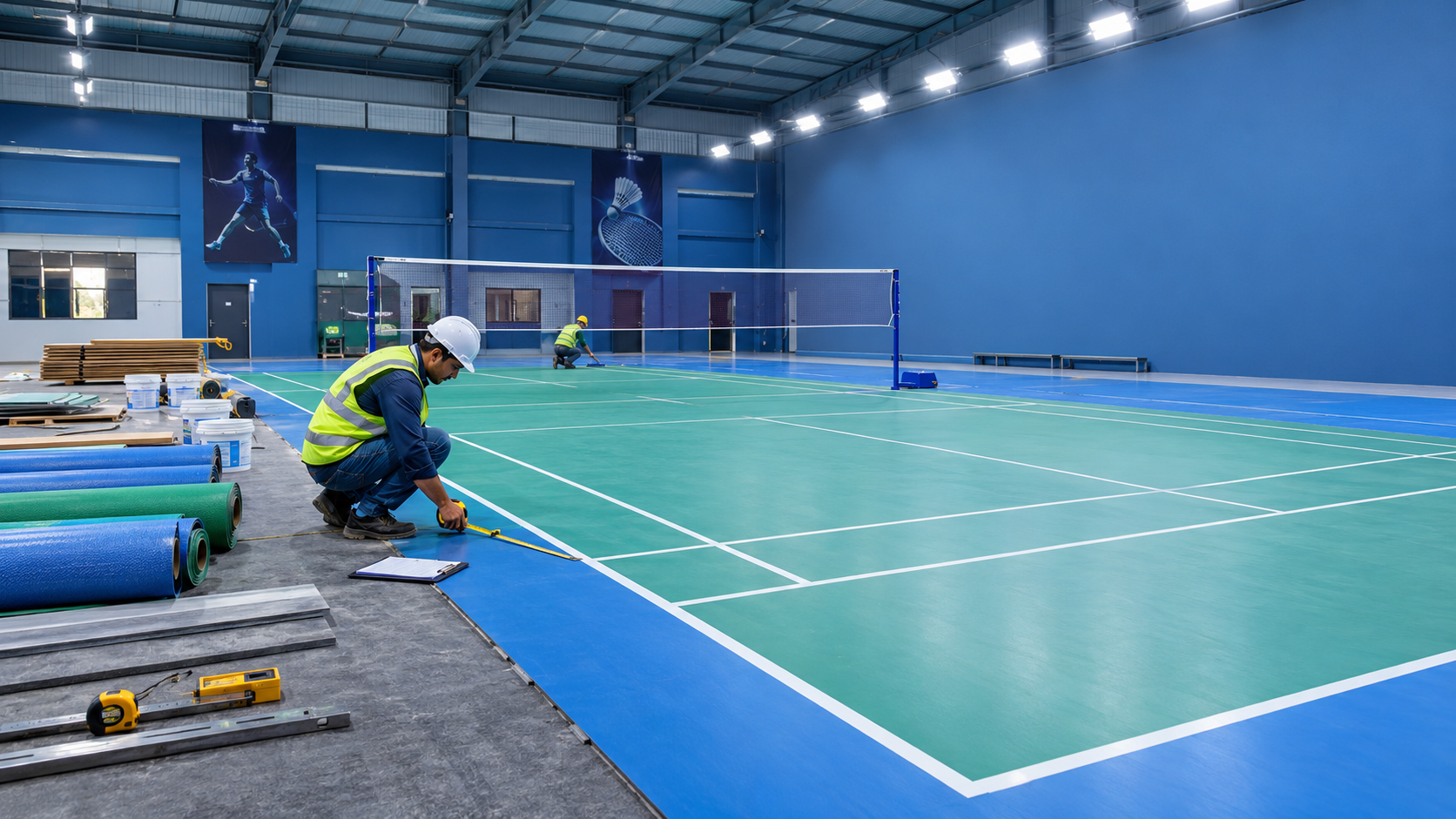
Site Inspection
Engineers inspect:
- Floor level
- Moisture content
- Structural strength
- Room dimensions
Base Preparation
The concrete base is:
- Cleaned
- Leveled
- Repaired
- Ground smooth
Moisture Testing
Moisture meters verify that the slab is suitable before installation.
Installation of Cushion Layer
Shock-absorbing materials improve player comfort.
Flooring Installation
Depending on the selected flooring system:
- Wooden panels are installed.
- PVC sheets are bonded.
- PU systems are poured.
- Synthetic layers are applied.
Court Marking
Professional sports paints create precise court lines.
Quality Inspection
Final checks include:
- Surface flatness
- Adhesion
- Dimensions
- Grip
- Finish quality
Benefits of Professional Badminton Flooring
Improved Player Safety
Professional sports flooring significantly reduces injuries caused by repeated impact.
Better Performance
Proper traction enables faster footwork.
Reduced Fatigue
Shock absorption minimizes stress on muscles and joints.
Long-Term Investment
Quality flooring lasts for many years with routine maintenance.
Attractive Appearance
Modern sports flooring enhances the overall aesthetics of the facility.
Common Mistakes to Avoid
Many projects fail because of avoidable mistakes.
Avoid:
- Using ordinary commercial flooring
- Ignoring moisture testing
- Poor subfloor preparation
- Incorrect court dimensions
- Low-quality installation
- Inadequate lighting
- Improper maintenance
Badminton Court Cost Factors
Project costs depend on several variables.
Flooring Material
Wooden flooring generally costs more than PVC or synthetic options.
Court Size
Larger facilities require additional materials and labor.
Base Construction
New foundations increase the overall budget.
Cushion System
Premium shock-absorbing layers improve comfort but add cost.
Accessories
Additional expenses may include:
- Nets
- Poles
- Lighting
- Seating
- Safety padding
- Ventilation systems
Labor
Experienced installation teams typically deliver better long-term value through quality workmanship.
How to Choose the Right Badminton Flooring
Consider the following factors before making a decision.
Budget
Select a flooring system that balances quality and long-term operating costs.
Usage Frequency
Daily professional use requires higher-grade materials than occasional recreational play.
Maintenance Capability
Choose flooring that matches your maintenance resources.
Player Level
Professional athletes benefit from premium cushioning and performance characteristics.
Future Expansion
Consider whether additional courts may be added later.
Badminton Court Maintenance Tips
Proper maintenance extends the lifespan of sports flooring.
Daily:
- Remove dust using microfiber mops.
- Wipe spills immediately.
Weekly:
- Clean with manufacturer-approved products.
- Inspect surface condition.
Monthly:
- Check court markings.
- Inspect expansion joints.
- Review net and pole condition.
Annually:
- Schedule a professional inspection.
- Repair worn areas promptly.
- Refinish wooden flooring when required.
Signs That Your Court Needs Replacement
Watch for these indicators:
- Surface cracks
- Peeling flooring
- Loss of grip
- Water damage
- Uneven flooring
- Excessive wear
- Frequent repairs
Timely replacement helps maintain player safety and consistent performance.
Badminton Court Trends in 2026
The sports flooring industry continues to evolve with innovations focused on performance and sustainability.
Key trends include:
- Eco-friendly flooring materials
- Low-VOC adhesives
- Enhanced shock-absorption systems
- Anti-bacterial surface coatings
- Improved acoustic performance
- Moisture-resistant engineered flooring
- Sustainable manufacturing practices
- Smart facility monitoring for maintenance planning
These advancements help facility owners improve player experience while reducing long-term operating costs.
Frequently Asked Questions
Which flooring is best for badminton courts?
Wooden sprung flooring is widely regarded as the premium choice for professional competition, while high-quality PVC sports flooring offers an excellent balance of performance, durability, and cost for schools, academies, and commercial facilities.
How long does badminton flooring last?
With proper installation and regular maintenance, quality sports flooring can last between 10 and 25 years, depending on the material and usage.
Is PVC flooring suitable for professional badminton?
Yes. Premium PVC sports flooring systems designed for badminton provide excellent cushioning, traction, and durability, making them suitable for many competitive indoor facilities.
Does badminton flooring require regular maintenance?
Yes. Routine cleaning, periodic inspections, and timely repairs help maintain performance, safety, and appearance while extending the flooring’s lifespan.
Can badminton courts be built inside multipurpose halls?
Yes. Many schools, colleges, and sports centers use multipurpose indoor halls with professional badminton flooring, provided the dimensions, lighting, and ceiling height meet recommended standards.
Conclusion
Indoor badminton court flooring is one of the most important investments in any sports facility. The right flooring enhances player safety, improves athletic performance, reduces maintenance issues, and delivers long-term value. Whether you choose premium wooden flooring, PVC vinyl, polyurethane, or another professional sports surface, success depends on careful planning, proper subfloor preparation, quality materials, and expert installation.
Before starting your project, evaluate your budget, expected usage, maintenance capabilities, and long-term goals. Investing in a professionally designed and installed indoor badminton court ensures a high-quality playing environment that serves athletes, coaches, schools, academies, and sports organizations for years to come.