Badminton has become one of the fastest-growing sports in India, with increasing demand from schools, sports academies, residential societies, fitness centres, and professional training facilities. However, one of the biggest decisions before building a badminton facility is choosing between indoor badminton court construction and outdoor badminton court flooring.
Both options have their own advantages, challenges, construction requirements, and maintenance needs. The right choice depends on several factors such as location, climate conditions, budget, player requirements, and long-term usage goals.
A professionally designed badminton court is not just about installing a playing surface. It requires proper planning, accurate dimensions, high-quality flooring systems, lighting design, ventilation, safety features, and durable construction techniques to ensure excellent playing performance.
This detailed guide explains the differences between indoor and outdoor badminton court construction, including flooring options, cost factors, design considerations, benefits, and expert recommendations to help you choose the best solution.
Understanding Modern Badminton Court Construction
A badminton court construction project involves multiple technical stages, including:
- Site evaluation and planning
- Court dimension marking
- Base preparation
- Flooring installation
- Shock absorption system
- Surface coating
- Lighting arrangement
- Drainage planning
- Safety features
- Regular maintenance planning
According to professional standards, a badminton court should provide:
- Proper player grip
- Controlled impact absorption
- Consistent ball bounce
- Slip resistance
- Reduced injury risk
- Long-lasting performance
The construction approach changes significantly depending on whether the court is built indoors or outdoors.
What Is Indoor Badminton Court Construction?
Indoor badminton court construction refers to developing a badminton playing facility inside a covered structure such as:
- Sports halls
- Schools
- Colleges
- Universities
- Professional academies
- Stadiums
- Multipurpose indoor arenas
- Residential clubhouses
Indoor courts provide controlled playing conditions because they protect players from weather-related problems such as rain, sunlight, wind, and humidity.
Professional indoor badminton facilities usually focus on creating a competition-level environment with high-quality flooring, proper lighting, ventilation, and safety systems.
Advantages of Indoor Badminton Court Construction
1. Weather Protection and Year-Round Playing
One of the biggest benefits of indoor badminton courts is uninterrupted gameplay throughout the year.
Outdoor courts can be affected by:
- Rain
- Strong sunlight
- Wind
- Dust
- Temperature fluctuations
Indoor facilities eliminate these problems and allow players to practice consistently regardless of weather conditions.
For sports academies and professional training centres, indoor construction is usually the preferred choice because it supports regular coaching programs and tournaments.
2. Better Playing Performance
Indoor courts provide better control over playing conditions.
Factors such as:
- Lighting
- Temperature
- Air movement
- Flooring quality
- Court surface
can be professionally managed.
A properly installed indoor badminton flooring system provides:
- Better foot movement
- Improved shock absorption
- Reduced joint stress
- Consistent shuttle movement
- Professional playing experience
3. More Flooring Options Available
Indoor badminton courts allow the installation of premium flooring systems such as:
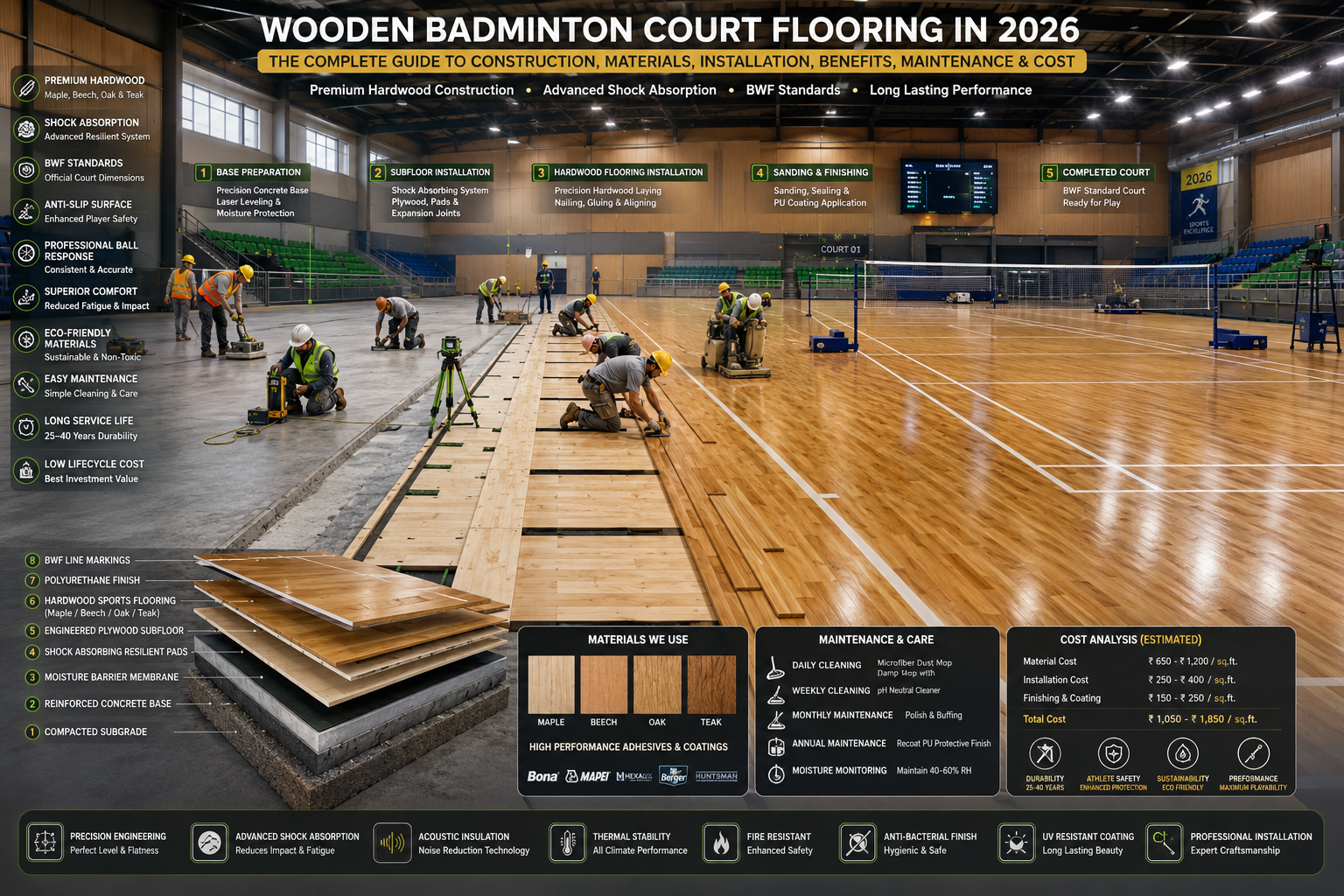
Wooden Sprung Flooring
Wooden flooring is commonly used in professional badminton facilities because of its excellent shock absorption and player comfort.
Benefits:
- Premium appearance
- Excellent impact protection
- Professional performance
- Long lifespan with proper maintenance
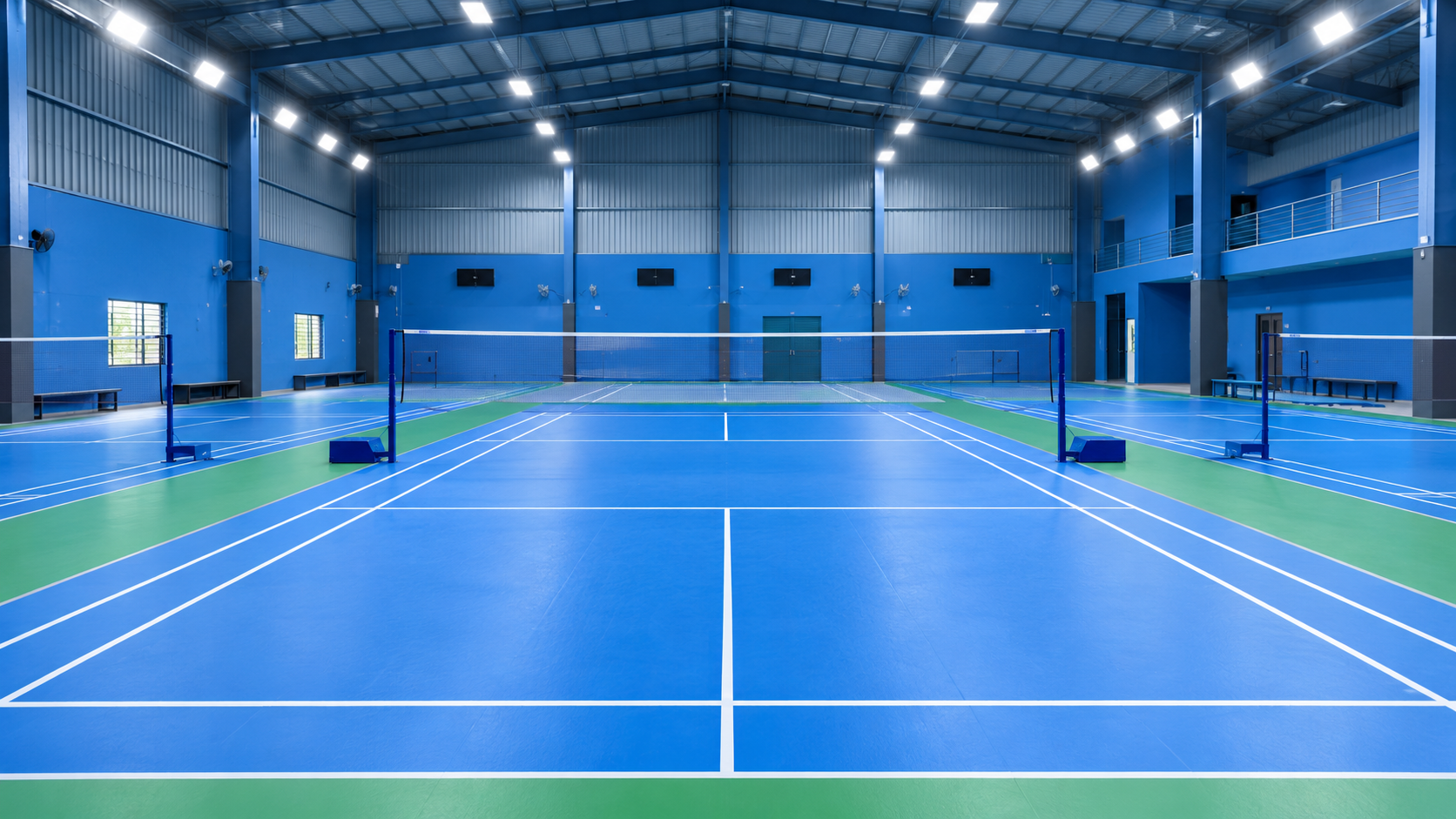
Synthetic PVC Badminton Flooring
PVC sports flooring is another popular option for indoor badminton courts.
Features:
- Multi-layer construction
- Cushioning properties
- Anti-slip surface
- Easy maintenance
- Good durability
PU Sports Flooring
Polyurethane flooring systems offer:
- Seamless finishing
- High durability
- Excellent grip
- Low maintenance requirements
These flooring systems are widely used in modern sports complexes.
4. Better Lighting and Visibility
Lighting plays a major role in badminton performance.
Indoor badminton court design allows proper installation of:
- LED sports lights
- Anti-glare lighting systems
- Uniform illumination
- Ceiling-mounted lighting arrangements
Good lighting improves:
- Shuttle visibility
- Player reaction time
- Match quality
5. Professional Tournament Facility
If the goal is to create:
- Training academies
- Tournament venues
- Sports clubs
- Commercial badminton centres
then indoor badminton court construction is usually the better investment.
It provides a premium environment suitable for serious players.
Challenges of Indoor Badminton Court Construction
Although indoor courts offer many benefits, they also require higher investment.
1. Higher Initial Construction Cost
Indoor badminton facilities require:
- Building structure
- Roofing system
- Electrical installation
- Ventilation
- Flooring system
- Lighting setup
This increases the overall project cost compared to outdoor courts.
2. Space and Infrastructure Requirements
Indoor courts require sufficient height clearance and building space.
A professional badminton court design should consider:
- Court dimensions
- Ceiling height
- Player movement area
- Spectator space
- Equipment storage
3. Maintenance Requirements
Indoor facilities require regular maintenance of:
- Flooring
- Lighting systems
- Ventilation equipment
- Building structure
However, maintenance is usually more predictable compared to outdoor courts.
What Is Outdoor Badminton Court Flooring?
Outdoor badminton court flooring refers to courts constructed in open spaces such as:
- Parks
- Residential societies
- Schools
- Resorts
- Community centres
- Open sports areas
Outdoor badminton courts are designed with materials that can withstand environmental conditions.
The main focus is:
- Weather resistance
- Durability
- Drainage
- UV protection
- Slip resistance
Advantages of Outdoor Badminton Court Flooring
1. Lower Construction Cost
Outdoor courts generally require less infrastructure because there is no need for:
- Large building structures
- Roofing systems
- Indoor lighting arrangements
This makes outdoor badminton courts a cost-effective option for many projects.
2. Faster Installation
Outdoor badminton court projects usually have shorter construction timelines.
The process generally includes:
- Site preparation
- Base construction
- Surface installation
- Court marking
- Final finishing
Professional contractors can complete outdoor installations efficiently when site conditions are suitable.
3. Ideal for Recreational Use
Outdoor badminton courts are excellent for:
- Housing societies
- Parks
- Schools
- Community areas
- Recreational facilities
They provide easy access and encourage more people to participate in sports activities.
Popular Outdoor Badminton Court Flooring Options
Acrylic Badminton Court Flooring
Acrylic flooring is one of the most commonly used outdoor badminton surfaces.
Advantages:
- Weather resistant
- UV stable
- Attractive appearance
- Good grip
- Low maintenance
Synthetic Sports Flooring
Synthetic outdoor flooring systems provide:
- Better comfort
- Shock absorption
- Improved player safety
- Long-term durability
Rubberized Flooring Systems
Rubber flooring provides additional cushioning and reduces impact on players’ joints.
Challenges of Outdoor Badminton Court Flooring
1. Weather Impact
Outdoor courts are exposed to:
- Rain
- Heat
- Dust
- Humidity
- Extreme temperatures
These factors can affect flooring life if the right materials are not selected.
2. Wind Problems
Badminton is highly sensitive to wind movement.
Strong outdoor winds can affect:
- Shuttle direction
- Match quality
- Player performance
3. More Frequent Maintenance
Outdoor courts may require:
- Surface cleaning
- Crack repair
- Re-coating
- Drainage maintenance
Regular maintenance is necessary to maintain performance.
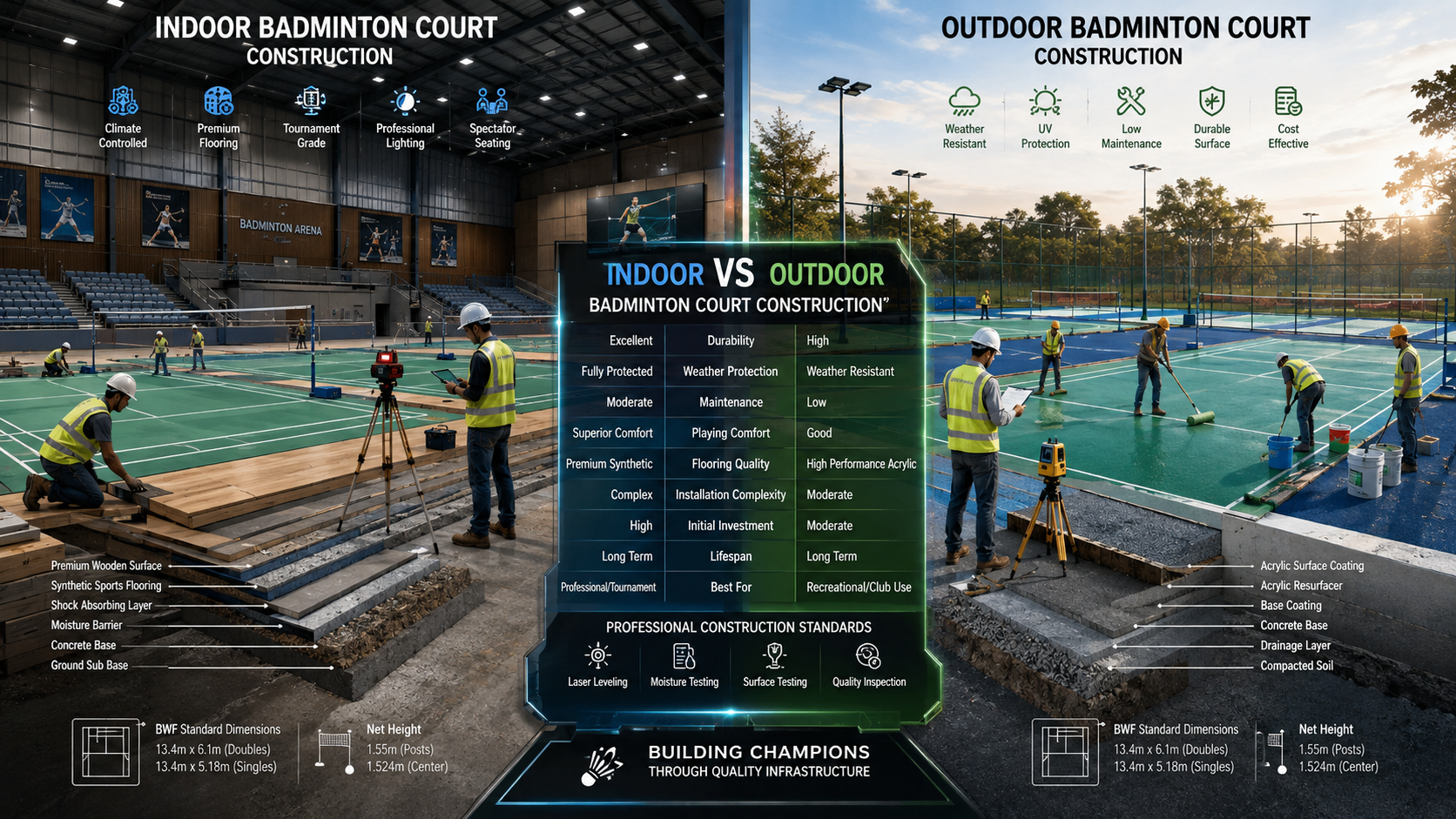
Indoor vs Outdoor Badminton Court Construction: Comparison Table
| Feature | Indoor Badminton Court | Outdoor Badminton Court |
|---|---|---|
| Weather Protection | Excellent | Limited |
| Construction Cost | Higher | Lower |
| Playing Quality | Professional level | Depends on conditions |
| Maintenance | Moderate | Higher |
| Flooring Options | More options available | Weather-resistant systems required |
| Tournament Use | Highly suitable | Limited |
| Installation Time | Longer | Faster |
| Player Comfort | Better | Depends on climate |
Badminton Court Design Considerations
A successful badminton facility requires careful design planning.
Important factors include:
1. Court Dimensions
A standard badminton court design should include:
- Playing area
- Safety clearance
- Player movement space
- Spectator area (if required)
2. Flooring Selection
The flooring should provide:
- Proper grip
- Shock absorption
- Controlled bounce
- Player safety
Choosing the wrong flooring can increase injury risks and reduce playing quality.
3. Lighting Design
A professional badminton court requires:
- Even light distribution
- Minimum glare
- Proper brightness levels
Poor lighting can affect player performance.
4. Ventilation and Air Flow
For indoor facilities:
- Proper ventilation
- Temperature control
- Air circulation
are essential for player comfort.
5. Drainage Planning for Outdoor Courts
Outdoor courts must include:
- Proper slope
- Rainwater drainage
- Water-resistant surface layers
This prevents water accumulation and surface damage.
Indoor vs Outdoor: Which Badminton Court Is Better?
The answer depends on your purpose.
Choose Indoor Badminton Court Construction If:
- You want a professional academy
- You plan tournaments
- You need year-round operation
- You want premium playing conditions
- You are developing a commercial sports facility
Choose Outdoor Badminton Court Flooring If:
- You have budget limitations
- The facility is recreational
- The location has favourable weather
- You need a community sports space
Expert Recommendation for Long-Term Investment
For commercial sports facilities, academies, and professional training centres, indoor badminton court construction is generally the better investment because it offers consistent playing conditions, higher customer satisfaction, and year-round usability.
For schools, societies, parks, and recreational projects, outdoor badminton court flooring can be an economical and practical solution when designed with high-quality weather-resistant materials.
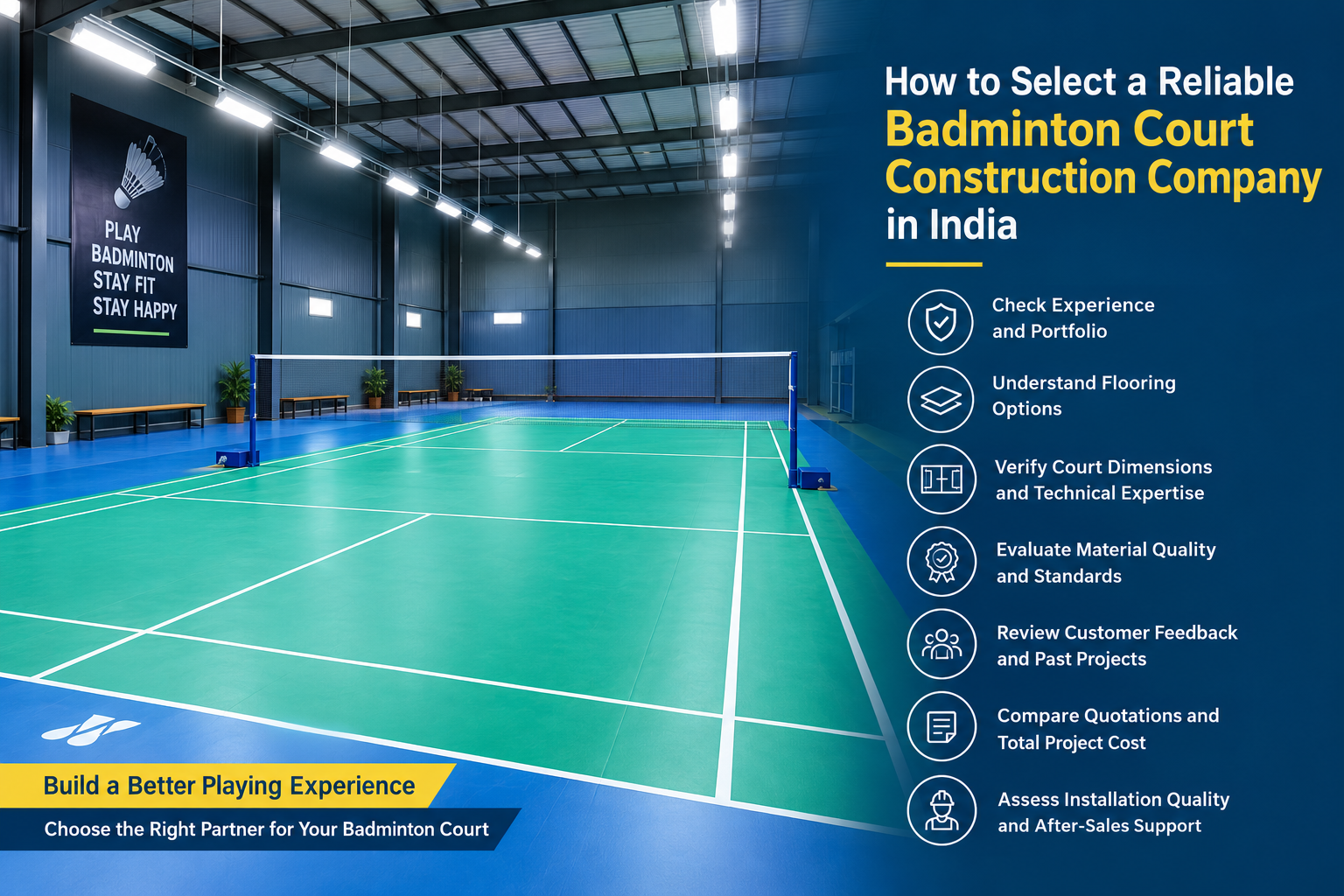
The most important factor is not only choosing indoor or outdoor construction but selecting the right flooring system, experienced contractor, and scientifically planned badminton court design.
Conclusion
Both indoor and outdoor badminton courts have unique advantages. Indoor badminton court construction delivers superior performance, weather protection, and professional-level playing conditions, while outdoor badminton court flooring provides affordability and easy accessibility.
Before starting your project, consider:
- Purpose of the facility
- Expected users
- Location climate
- Budget
- Maintenance requirements
- Future expansion plans
A professionally designed badminton court can provide years of safe, enjoyable, and high-performance sports experiences.
Choosing the right construction approach today will determine the durability, performance, and success of your badminton facility tomorrow.