Introduction
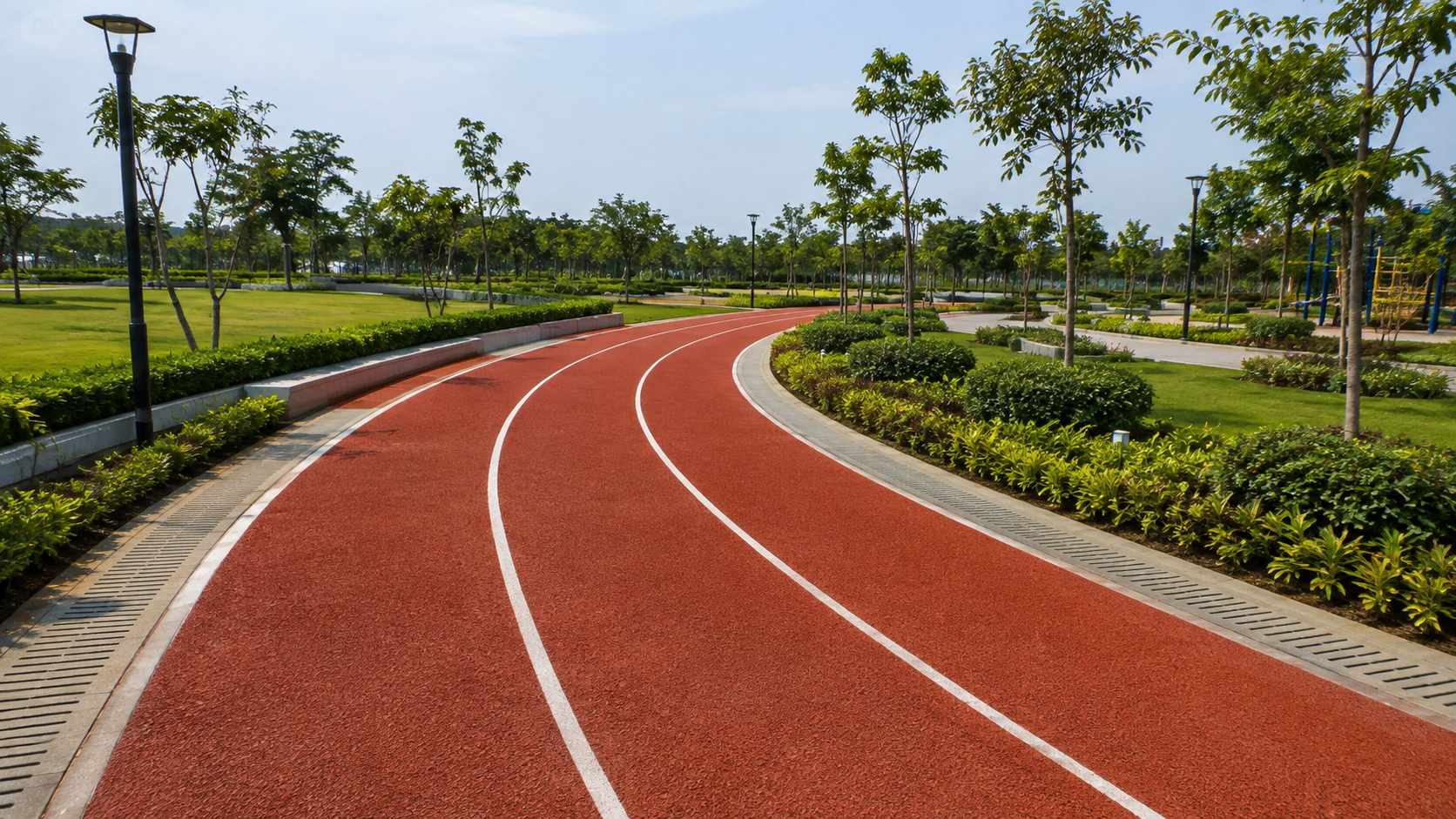
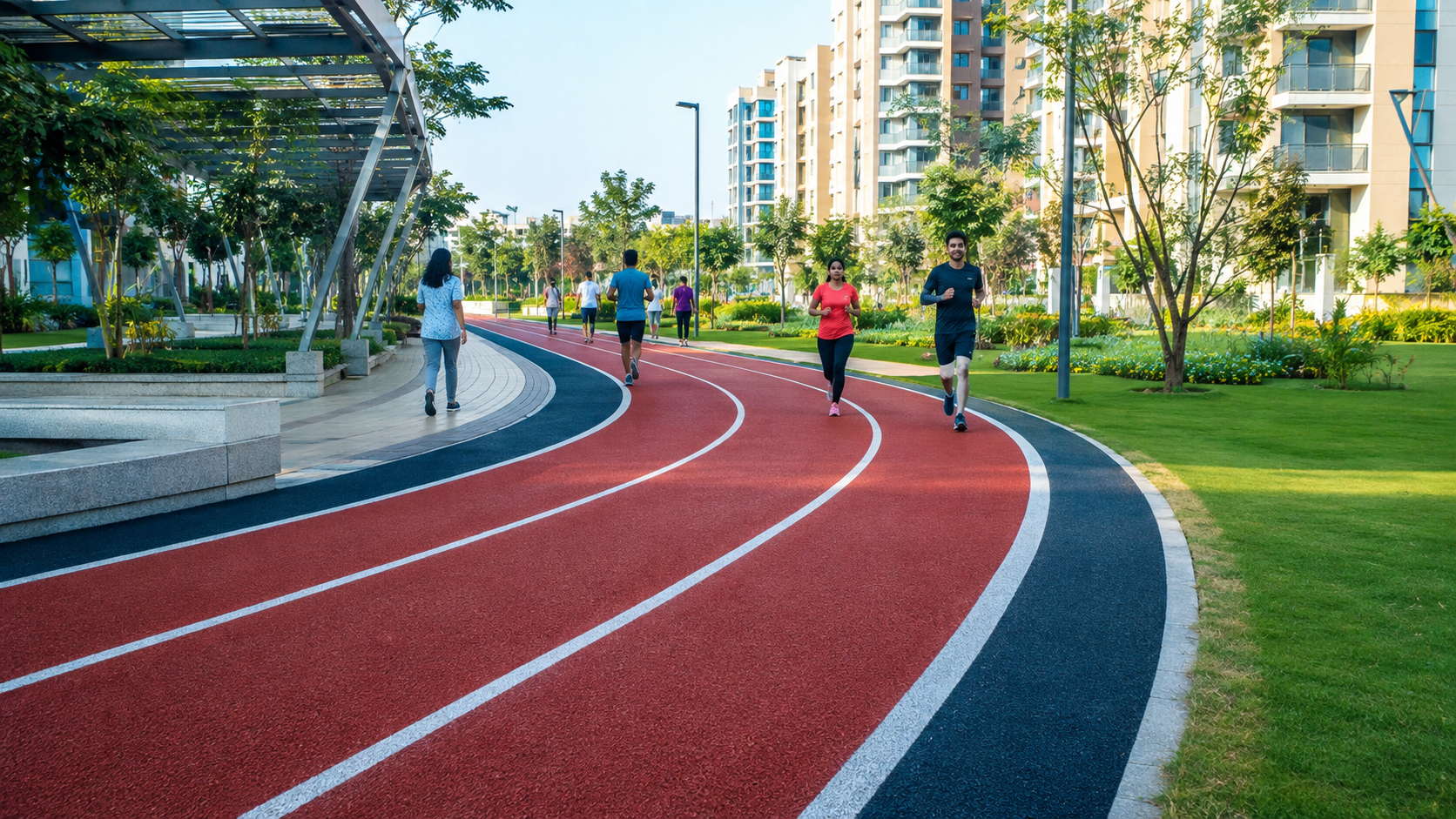
A professional jogging track is more than a marked pathway around a park or sports facility. A properly designed track provides a comfortable, safe, durable, and consistent surface for walking, jogging, running, and fitness activities. In India, jogging tracks are increasingly being developed in residential communities, schools, colleges, hotels, resorts, corporate campuses, public parks, sports complexes, and fitness centres.
Building a quality jogging track requires careful planning from the initial site survey to the final surface finishing. The soil condition, drainage system, track dimensions, surface material, weather conditions, expected usage, and maintenance requirements all influence the final result.
Whether the project is a small community jogging track or a large professional running facility, choosing the right construction method and flooring system can significantly improve its performance and lifespan.
This guide explains how to build a professional jogging track in India, including planning, construction, surface selection, drainage, installation, cost factors, and maintenance.
What Is a Professional Jogging Track?
A professional jogging track is a specially designed running and walking surface created to provide suitable traction, cushioning, stability, and durability. Unlike ordinary concrete or asphalt pathways, a professionally constructed track is designed with the movement and comfort of users in mind.
The surface should provide enough grip without being excessively hard. It should also withstand repeated foot traffic, outdoor weather conditions, and regular cleaning and maintenance.
Depending on the project requirements, jogging tracks can be constructed using materials such as:
- EPDM rubber flooring
- PU synthetic flooring
- Acrylic surfaces
- Rubberized running track systems
- Interlocking sports tiles
- Specialized outdoor sports surfaces
The appropriate material depends on the intended use, available budget, site conditions, climate, and expected level of activity.
Select the Right Location
The first stage of jogging track construction is selecting a suitable location.
The area should have enough space for the proposed track while also allowing room for landscaping, lighting, seating, exercise zones, pathways, and other facilities where required.
Before construction begins, the site should be evaluated for:
- Available land area
- Existing ground levels
- Soil condition
- Water drainage
- Accessibility
- Existing trees and structures
- Electrical requirements
- Underground utilities
- Flooding or waterlogging risks
- Expected pedestrian movement
A site that frequently collects rainwater may require additional drainage and civil work before the track surface can be installed.
Plan the Track Layout
Once the site has been selected, the track layout should be prepared.
The layout depends on the available land and purpose of the project. A residential jogging track may follow the boundary of a landscaped park, while a sports facility may require a more structured running circuit.
The designer should determine:
- Total track length
- Track width
- Number of lanes, if applicable
- Curves and turning areas
- Entry and exit points
- Walking zones
- Running zones
- Drainage locations
- Lighting positions
- Landscaping requirements
For a community or recreational jogging track, a simple loop can provide an efficient layout. Longer tracks can be divided into marked distances so users can easily monitor their walking or running sessions.
The surface should also be designed to avoid unnecessarily sharp turns. Smooth curves improve movement and reduce sudden changes in direction.
Conduct a Detailed Site Survey
A site survey is an important part of professional jogging track construction.
The contractor or sports flooring specialist should inspect the existing ground and identify potential construction problems before work starts.
The survey generally considers:
- Existing levels
- Soil stability
- Slope
- Surface condition
- Water movement
- Existing pavement
- Cracks or settlement
- Drainage requirements
- Access for construction equipment
If the existing ground is weak or uneven, simply installing a sports surface over it may result in cracks, depressions, or premature surface damage.
Proper preparation at this stage can prevent expensive repairs later.
Prepare the Foundation
The foundation is one of the most important components of a jogging track.
A high-quality surface cannot compensate for a poorly prepared base. The sub-base must be stable, properly compacted, and designed to support the expected traffic.
Depending on the site, foundation work may include:
- Clearing vegetation and unwanted material.
- Excavating unsuitable soil.
- Leveling the area.
- Preparing the subgrade.
- Installing suitable granular material.
- Compacting the base.
- Creating the required slope.
- Installing drainage infrastructure.
- Constructing the final base layer.
The exact construction layers depend on the surface system and site conditions.
Proper compaction is particularly important because settlement beneath the track can eventually create uneven areas.
Install an Effective Drainage System
India experiences a wide range of weather conditions, including heavy monsoon rainfall in many regions. Therefore, drainage should be considered during the design stage rather than after the track has been completed.
Water should not remain standing on the jogging surface.
A professional project may require:
- Side drains
- Surface slopes
- Drainage channels
- Catch basins
- Perforated drainage pipes
- Proper discharge points
The track should be designed so that rainwater moves away from the running surface efficiently.
Poor drainage can cause waterlogging, algae growth, surface deterioration, and damage to the underlying layers.
Select the Right Jogging Track Surface
Choosing the right surface is one of the most important decisions in the entire project.
Different materials provide different levels of cushioning, durability, traction, maintenance requirements, and weather resistance.
EPDM Rubber Jogging Track
. The final surface can be designed in different colours and patterns.
Potential applications include:
- Public parks
- Residential communities
- Schools
- Fitness centres
- Hotels
- Resorts
- Corporate campuses
PU Synthetic Running Surface
Polyurethane-based systems are another option for professional sports and running applications.
They can provide a smooth, durable surface with consistent performance when correctly installed over a suitable base.
PU systems may be selected for projects where a more specialized synthetic athletic surface is required.
Acrylic Surface
Acrylic systems are commonly associated with outdoor sports surfaces. Depending on the system, they can be used for recreational pathways and multi-purpose areas.
They are generally easier to maintain than some specialized surfaces, but the appropriate system should be selected according to the intended use.
Rubberized Surface
Rubberized systems can provide cushioning and improved walking and jogging comfort compared with very hard traditional surfaces.
They are particularly useful where user comfort is a major consideration.
Consider Track Width
Track width should be selected according to the expected number of users and the purpose of the facility.
A narrow pathway may be sufficient for light residential walking, while a busy public park requires additional width to allow people to walk, jog, and pass one another safely.
If the track is expected to accommodate runners moving in opposite directions, adequate width should be provided.
For larger projects, separate walking and running areas can also be considered.
There is no single track width suitable for every Indian project. The correct dimension should be determined from the site layout, expected usage, safety requirements, and applicable project standards.
Create Proper Surface Slope
A jogging track should not be completely flat if doing so prevents water from leaving the surface.
A carefully planned gradient helps rainwater move toward the drainage system.
However, excessive slope can affect the comfort of users and may make running more difficult.
Therefore, the surface should be accurately leveled and graded during construction.
The contractor should use professional leveling equipment to ensure consistency across the entire track.
Install the Surface System
Once the base is ready, the selected jogging track flooring system can be installed.
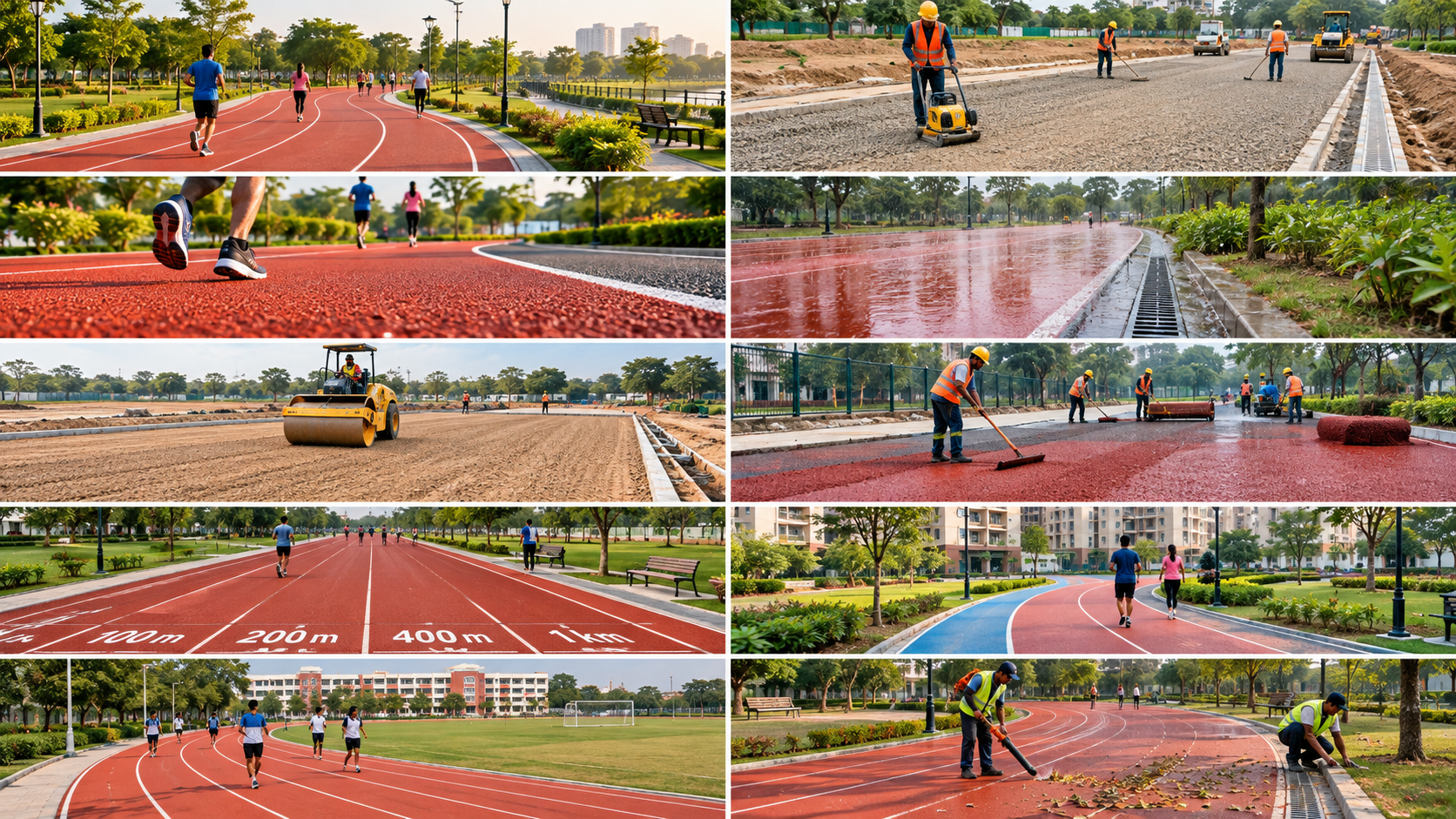
For a rubberized system, installation may involve:
- Preparing the base
- Applying primer where required
- Mixing rubber granules and binder
- Installing the elastic layer
- Allowing appropriate curing
- Applying the top surface
- Installing coloured areas
- Completing markings
- Inspecting the finished surface
For PU systems, the installation sequence will depend on the manufacturer’s specifications and the selected system.
The manufacturer’s recommended curing time should be followed carefully. Allowing users onto the surface before the material has properly cured can affect the finish and long-term performance.
Add Distance Markings
Distance markings can make a jogging track much more useful.
Markings can indicate:
- 100 metres
- 200 metres
- 400 metres
- 500 metres
- 1 kilometre
- Direction arrows
- Start and finish points
- Walking and running zones
For recreational tracks, simple distance indicators can help users monitor their activity.
For sports or institutional facilities, markings can be designed according to the specific purpose of the track.
Choose Suitable Colours
Colour plays both a functional and aesthetic role.
Jogging tracks can be installed in several colours depending on the flooring system.
Popular choices include:
- Red
- Green
- Blue
- Terracotta
- Grey
- Black
- Orange
- Custom colour combinations
For public parks and residential developments, the track colour is often selected to complement the surrounding landscaping.
Contrasting colours can also be used to separate running areas from walking or recreational zones.
Install Lighting and Safety Features
A jogging track that will be used during early mornings or evenings should have suitable lighting.
Lighting should provide adequate visibility without creating uncomfortable glare.
Additional safety features may include:
- Direction signs
- Distance boards
- Seating areas
- Drinking-water facilities
- Emergency access
- CCTV where appropriate
- Boundary barriers
- Reflective markings
The surrounding landscape should also be maintained so that branches, roots, stones, or other obstacles do not interfere with the running surface.
Inspect the Finished Track
Before opening the track for regular use, a final inspection should be conducted.
The inspection should check:
- Surface evenness
- Drainage
- Surface adhesion
- Joint condition
- Colour consistency
- Track markings
- Edge finishing
- Surface defects
- Water accumulation
- Overall appearance
Any visible defects should be corrected before the facility is opened.
A professional handover should also include information about cleaning, maintenance, repair procedures, and recommended usage.
Important Factors Affecting Jogging Track Construction Cost in India
The cost of building a jogging track varies significantly from one project to another. There is no single price applicable to every location.
Several factors influence the overall project cost.
1. Track Size
A larger track requires more civil work, materials, labour, and finishing.
2. Existing Ground Condition
If the existing soil is unstable or the site requires extensive excavation and leveling, construction costs may increase.
3. Flooring Material
Different surfaces have different material and installation costs. EPDM, PU, acrylic, and other synthetic systems vary in price.
4. Base Preparation
A professionally prepared foundation can represent a significant portion of the total project cost.
5. Drainage
Sites requiring new drainage channels, pipes, or water-management infrastructure will require additional civil work.
6. Track Design
Curves, multiple lanes, colour combinations, distance markings, and special layouts can affect the overall budget.
7. Project Location
Transportation, labour availability, site accessibility, and material logistics can influence the cost of projects in different parts of India.
8. Installation Requirements
The complexity of the flooring system and the condition of the existing surface can influence installation expenses.
9. Additional Facilities
Lighting, landscaping, benches, signage, fencing, drinking-water stations, and fitness equipment may be included in the overall project.
How Long Does a Jogging Track Last?
The service life of a jogging track depends on its surface material, installation quality, usage level, climate, drainage, and maintenance.
A properly designed and maintained synthetic track can provide many years of service.
However, heavy daily use, poor drainage, standing water, harsh cleaning chemicals, extreme weather exposure, and inadequate maintenance can reduce surface life.
Regular inspections are therefore important.
Jogging Track Maintenance
Routine maintenance helps preserve the appearance and performance of the surface.
A basic maintenance program may include:
- Removing dust and leaves regularly
- Cleaning the surface with suitable methods
- Removing standing water
- Inspecting drainage channels
- Checking for damaged areas
- Repairing small defects promptly
- Avoiding sharp objects on the surface
- Preventing oil and chemical spills
- Controlling surrounding vegetation
- Periodically inspecting the complete track
The maintenance procedure should always follow the recommendations provided for the particular flooring system.
Common Mistakes to Avoid
Several mistakes can reduce the performance and lifespan of a jogging track.
Installing Flooring Over a Poor Base
A premium surface cannot solve problems caused by an unstable foundation.
Ignoring Drainage
Waterlogging can cause significant problems, especially in areas affected by heavy monsoon rainfall.
Choosing Flooring Only by Price
The cheapest material may not always provide the required performance, comfort, or durability.
Poor Surface Preparation
Dust, moisture, cracks, and unevenness can affect adhesion and final surface quality.
Incorrect Track Design
Sharp corners, insufficient width, and poor access planning can reduce user comfort and safety.
Using Inappropriate Cleaning Chemicals
Harsh chemicals may damage synthetic surfaces and affect their appearance.
Skipping Professional Installation
Sports surfaces require accurate mixing, application, leveling, curing, and finishing. Installation quality has a major impact on long-term performance.
Why Professional Jogging Track Construction Matters
A professional jogging track combines civil engineering, drainage planning, surface technology, and sports-facility design.
The objective is not simply to create an attractive pathway. The track should provide a reliable surface that users can comfortably use over an extended period.
Professional construction helps ensure:
- Accurate levels
- Stable foundations
- Effective drainage
- Consistent surface texture
- Proper cushioning
- Reliable traction
- Better durability
- Clean finishing
- Correct markings
- Easier maintenance
For larger projects, working with an experienced sports flooring and facility construction company can simplify the process from site inspection through installation and handover.
Applications of Professional Jogging Tracks in India
Jogging tracks can be developed in many types of facilities, including:
- Residential societies
- Apartment complexes
- Public parks
- Municipal parks
- Schools
- Colleges
- Universities
- Sports academies
- Corporate campuses
- IT parks
- Hotels
- Resorts
- Hospitals
- Fitness centres
- Defence facilities
- Stadium complexes
- Community recreation centres
The design can be customized according to the available land, expected users, surrounding environment, and project budget.
Final Thoughts
Building a professional jogging track in India requires much more than laying a coloured surface over the ground. A successful project begins with proper site assessment and continues through layout planning, foundation preparation, drainage construction, surface selection, professional installation, markings, inspection, and ongoing maintenance.
The right flooring system should be selected according to the project’s actual requirements rather than appearance or price alone. Similarly, proper drainage and foundation preparation should receive as much attention as the visible finishing layer.
Whether the requirement is for a residential jogging track, school running track, public park, corporate fitness facility, or large sports complex, careful planning can create a comfortable and durable environment for daily walking, jogging, and fitness activities.
A professionally constructed jogging track can become a valuable long-term facility, encouraging regular physical activity while improving the overall usability and appearance of the surrounding space. With the right materials, experienced installation, and a suitable maintenance plan, a jogging track can deliver reliable performance for years.